

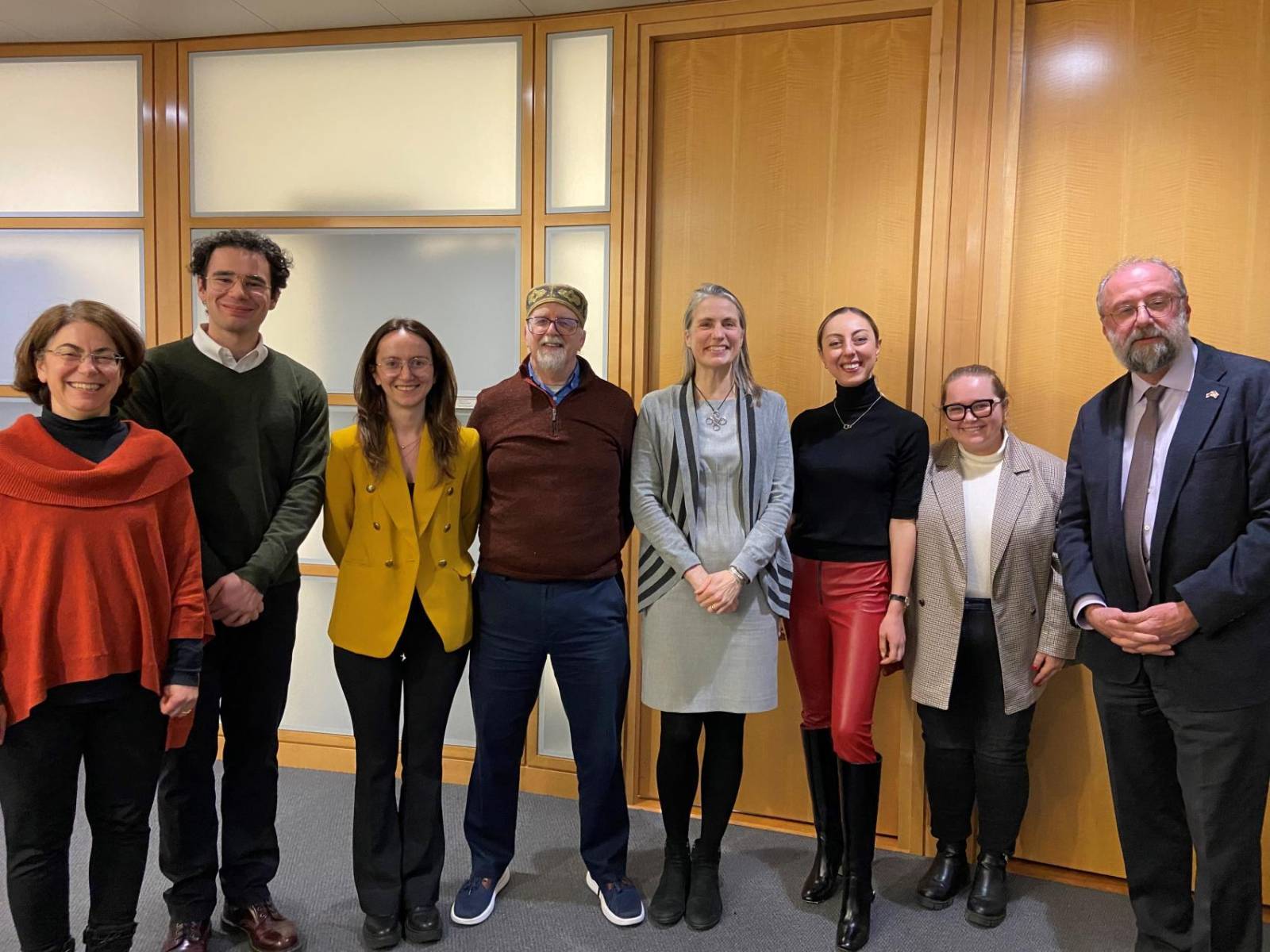
The program on Georgian Studies at Harvard University in the U.S., launched in 2022 within the Davis Center for Russian and Eurasian Studies with the backing of the Georgian government, has closed after the Georgian Education Ministry refused to extend funding.
The Ministry cited the university’s failure to submit an “agreed program” about the project’s future as the reason for the refusal to approve the extension. Natia Chankvetadze, the program’s latest head, however, says no feedback was received from the ministry on the extension proposal, and suggested the absence of “political will” may be the true reason.
The program, with a mission to become a “leading hub” for Georgian studies outside Georgia, was first inaugurated by then-Prime Minister Irakli Garibashvili in September 2021, and launched in 2022, covering teaching, research, and exchanges focused on Georgian language, history, politics, and culture, among others.
It was initially headed by Professor Stephen Jones, a longtime scholar of Georgian history and politics, before Dr. Natia Chankvetadze, a peacebuilding scholar and practitioner, assumed leadership in late August 2024.
Reports about the program’s closure emerged on August 21, with observers – including former program fellow Beka Kobakhidze – alleging that the decision stemmed from Tbilisi’s dissatisfaction with the political stances of Harvard academics, including its initial head, Stephen Jones.
Ministry Cites Absence of ‘Agreed’ Program
Commenting on initial reports about the project’s closure, the Georgian Education Ministry said on August 22 that the funding extension could not be granted because Harvard had failed to submit an “agreed program” for the project’s future.
The ministry said it “asked Harvard to provide a report on the work completed and a concrete vision for the program’s further development,” but “the program’s further extention could not be agreed because, for the launch of the new phase, no agreed program has been submitted to the ministry which would define specific activities, a budget, an implementation timeline, and measurable outcomes.”
According to the ministry, the decision not to extend the project was based “on the efficient and accountable management of state resources and the existence of the programmatic and financial framework required to launch a new phase.” It “does not mean a refusal of academic cooperation with Harvard.”
The Ministry argued that it had expressed readiness for continued cooperation as part of the program and had allocated funding, while extending funding several times, including till March 31, 2025, “to allow the program to complete remaining activities and present the relevant reports.” It also pointed to the readiness to carry out joint activities “consistent with the goals and purpose set out in the contract” after the program’s closure, noting that Harvard can still direct the funds for the program objectives “based on the submission of financial reports and documents.”
The ministry “remains ready to consider future cooperation with Harvard on the basis of clearly defined objectives, an agreed budget, an implementation timeline, and measurable outcomes,” the statement said.
Program Head Points to Lack of ‘Political Will’, No Feedback From Ministry
Speaking to Civil.ge, Natia Chankvetadze, who headed the program until late June 2026, suggested that a lack of political will may have been the real reason behind the ministry’s decision, noting that the authorities did not provide feedback on the extension proposal submitted last year.
“I think that, simply, there is no longer a political will from the ministry to extend this program rather than the reasons the Ministry cited, because they had received both the reports and the vision for the further development,” Chankvetadze said.
According to Chankvetadze, the program was launched in 2022 through a one-time, 3.5-year project grant agreement with the Education Ministry, with the initial project period expiring in mid-2025. She said the program was extended for another year through a combination of bridge funding from Harvard’s Davis Center, several extensions granted by the Education Ministry that allowed the university to use the remaining funds from the initial grant, and additional fundraising.
Over the course of the project, she said, the university provided the ministry with both financial and programmatic reports, including monthly and annual reports, as well as a detailed 45-page final report on the program’s work in June 2026.
According to Chankvetadze, a new grant proposal for a three-year grant was submitted to the ministry in 2025, requesting funding “less than half the amount of the previous grant” amid expectations of additional support from Harvard’s Davis Center. She said, however, that the ministry provided no feedback either to the proposal or to the final program report submitted in 2026.
Georgia-Related Projects Set to Continue
Chankvetadze hopes to maintain Georgia-focused teaching and research at Harvard, pointing to the program’s accomplishments over the past four and a half years, including Georgian-language classes offered to more than 40 students and academic exchanges that benefited more than 175 people.
“Studying Georgia will continue at Harvard University for at least another year, even under the program’s closure,” she wrote on Facebook. “What’s more, a new project also is planned, with a new institutional home, again at Harvard.”
She told Civil.ge the efforts will include continued Georgian-language classes, at least another year of her offering a Georgian Studies Seminar at the Davis Center, as well as a separate planned project with Harvard’s Center for International Development.
While the Georgian Studies program is unlikely to be revived in its previous form, she said efforts are underway to secure funding, including from diaspora groups and the private sector, to maintain the program’s core areas of work.
Also Read:

