

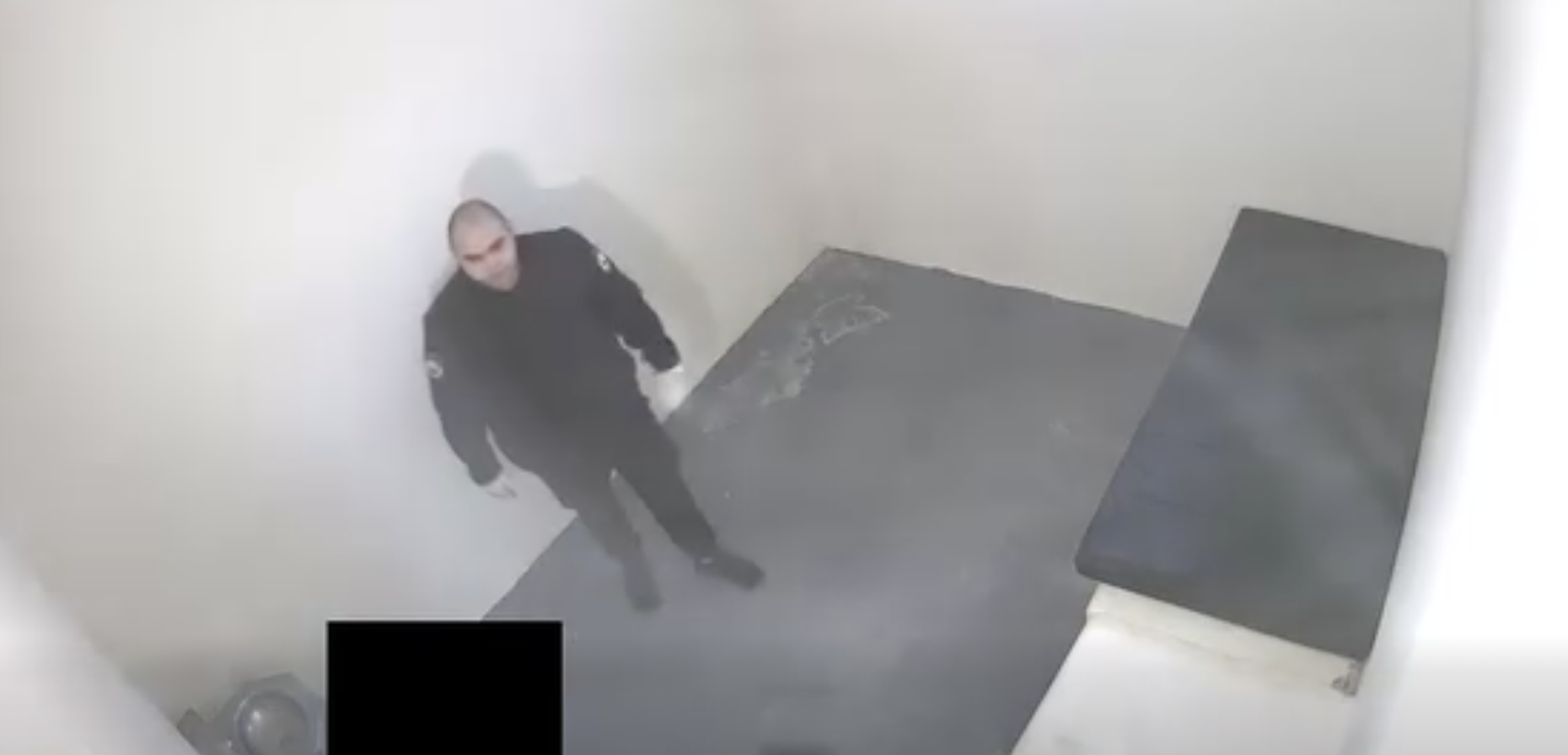
A prison guard named in one of Georgia’s most closely watched prison controversies in years no longer works for the state. The Georgian Penitentiary Service has confirmed that Giorgi Varabiovi, a guard identified in media reports as taking part in the search of inmate Giorgi Davitadze, left the service at his own request. The agency told RFE/RL’s Georgian service that he left in March 2026, months before Davitadze’s allegations became public.
The confirmation follows the Prosecutor’s Office decision to close its investigation, saying no crime had taken place. The case, however, is far from settled in public debate, and it matters well beyond Georgia’s borders, including for readers in New Zealand’s Indian community who follow the country closely.
Key points
- Varabiovi, reportedly 22, left Rustavi’s Prison No. 6 on 25 March 2026, according to the Penitentiary Service.
- Davitadze, 36, told an appeals court that guards sexually assaulted him on 21 December 2025. The Penitentiary Service calls the claim “a complete lie”.
- Prosecutors closed the case on 9 October and announced it on 10 October, saying no violence or criminal act took place.
- Rights groups, opposition politicians and the inmate’s family say the muted footage cannot settle the question and want an independent investigation.
- More than 20,000 Indian students were enrolled in Georgian universities in 2024–25, which is one reason this story travels.
What the Penitentiary Service says about the guard
The agency told Civil.ge that Varabiovi left “several months ago” and gave no further reason. It did not say whether his departure was linked to the Davitadze case. According to the service’s own timeline, he was appointed as an inspector-controller at Prison No. 8 in October 2022, left that post a month later, joined Prison No. 6 in June 2023 and resigned on 25 March 2026.
Georgian media identified him as the guard wearing medical gloves in the footage from the de-escalation room. The authorities say he took part in the search. Davitadze says he took part in the assault. A media identification is not a finding of wrongdoing, and prosecutors have concluded that no crime was committed.
Who is Giorgi Davitadze and what does he allege?
Davitadze is serving a sentence of 17 years and six months, handed down by the Tbilisi City Court in October 2025. He is the son of Avtandil Davitadze, a former Georgian Dream member of the Tbilisi City Council. His allegations became public on 2 October 2026, when audio of his testimony at the Tbilisi Court of Appeals was broadcast by TV Pirveli.
He told the judges that guards sexually assaulted him during a search in a de-escalation room on 21 December 2025. He said staff positioned themselves so the cameras could not see what was happening. The Penitentiary Service rejects this entirely, describing the claim as part of a campaign by his family to discredit the prison system.
Timeline of the case
| Date | What happened |
| 21 December 2025 | Davitadze is moved to a de-escalation room and searched. This is the incident at the centre of the case. |
| 26 December 2025 | A Public Defender’s Office representative visits him. The matter is referred to prosecutors, and an investigation is opened. |
| 25 March 2026 | Varabiovi leaves the Penitentiary Service. |
| 2 October 2026 | The allegations become public. The service releases muted footage. |
| 3 October | The family and supporters protest outside the prison. |
| 4 October | The service says Davitadze swallowed an unidentified object and refused hospital treatment. The Public Defender’s Office says he is refusing care until three inmates held in de-escalation cells are returned to their cells. |
| 5 October | Public Defender Levan Ioseliani says the footage does not show abuse, but that prosecutors “must investigate what we cannot see”. |
| 9–10 October | Prosecutors close the investigation and announce the decision. |
What the authorities say
The Penitentiary Service says its footage shows Davitadze refusing a mandatory search and insulting staff before a forced search with a handheld metal detector. It says no violence was used and that it released the video because of the public reaction.
Prosecutors went further. They said dozens of witnesses, including other inmates, were questioned and that dozens of hours of video were examined, with an expert reviewing the de-escalation room recordings second by second. They said the footage showed no sign of editing. They also said Davitadze declined a forensic medical examination and that his account changed over time. In their words, the evidence shows “no violence or criminal act was committed against Giorgi Davitadze during his examination in the de-escalation room”.
Three other inmates have been charged with assaulting prison staff in separate incidents on 2 and 4 October. The charges carry up to 12 years in prison. The Penitentiary Service says they were moved to de-escalation cells after attacking employees, not for protesting in Davitadze’s support.
Why critics are not convinced
The released footage has no audio, and in places guards stand in positions that block the view of Davitadze’s body. The Justice Minister, Paata Salia, has said Georgian law does not provide for audio recording. That explanation has not quieted the doubts.
More than ten organisations, including the Georgian Young Lawyers’ Association, the Social Justice Center and Transparency International Georgia, said the video “cannot replace an independent and effective investigation”. They asked whether the original recording and other camera footage exist. Opposition politician Irakli Kupradze of Lelo–Strong Georgia called for an independent inquiry, suspension of the staff involved and international monitoring.
Davitadze’s mother, Irma Davitadze, has demanded the resignation of the prison service chief and the director of Prison No. 6. The family has also asked for Davitadze to be moved to another prison, saying he is at risk where he is. Reports from Georgian outlets such as JAMnews and Georgia Today record both the family’s claims and the service’s denials.
A prison system under pressure
The case lands in a system that is already stretched. Georgia’s prisons received 22,767 convicted people in 2025, 25.5% more than the year before, according to figures reported by JAMnews. The number of inmates stood at 11,153 at the end of 2025. In July 2026, Prison No. 8 in Gldani held 3,203 people against a limit of 2,426, as SOVA reported, citing rights groups.
History adds weight. In September 2012, footage from the same Prison No. 8 showed guards beating and abusing prisoners. It led to mass protests, ministerial resignations and a change of government. Former Public Defender Ucha Nanuashvili argues that reforms begun afterwards were not completed and that the system remains closed to outside scrutiny. The authorities reject claims of systemic abuse.
The wider rule-of-law picture
The story fits a broader debate about institutions in Georgia. For more context, read our reports on the EU’s finding of significant democratic backsliding in Georgia, the ComCom fine against TV Pirveli, the channel that broadcast Davitadze’s testimony, and the case of an Adjara TV journalist who reported repeated abuse. You can follow all of our coverage in the Georgia news section.
Why this matters to Indian readers in New Zealand
Georgia is a major destination for Indian students. In the 2024–25 academic year, 20,319 Indian citizens were among 37,125 foreign students in the country, JAMnews reported, citing official statistics. Most foreign students study medicine. Many families in the Indian diaspora, including in New Zealand, follow how Georgian institutions work for that reason.
None of the reports reviewed links the Davitadze case to foreign nationals. Still, how a state treats people in custody is a basic test of the rule of law. If you have relatives studying or working in Georgia, check New Zealand’s SafeTravel advice and the guidance from your family’s own embassy.
What happens next
Prosecutors have closed the case, but the public argument has not ended. The open questions raised by rights groups are whether the original recordings and other camera angles can be examined independently, and whether the Public Defender’s monitoring body will keep a close eye on Prison No. 6. Davitadze remains in custody. Varabiovi’s departure, which the service says was voluntary, removes one name from the staff list but answers none of those questions.
We will update this report as new information is confirmed.

