

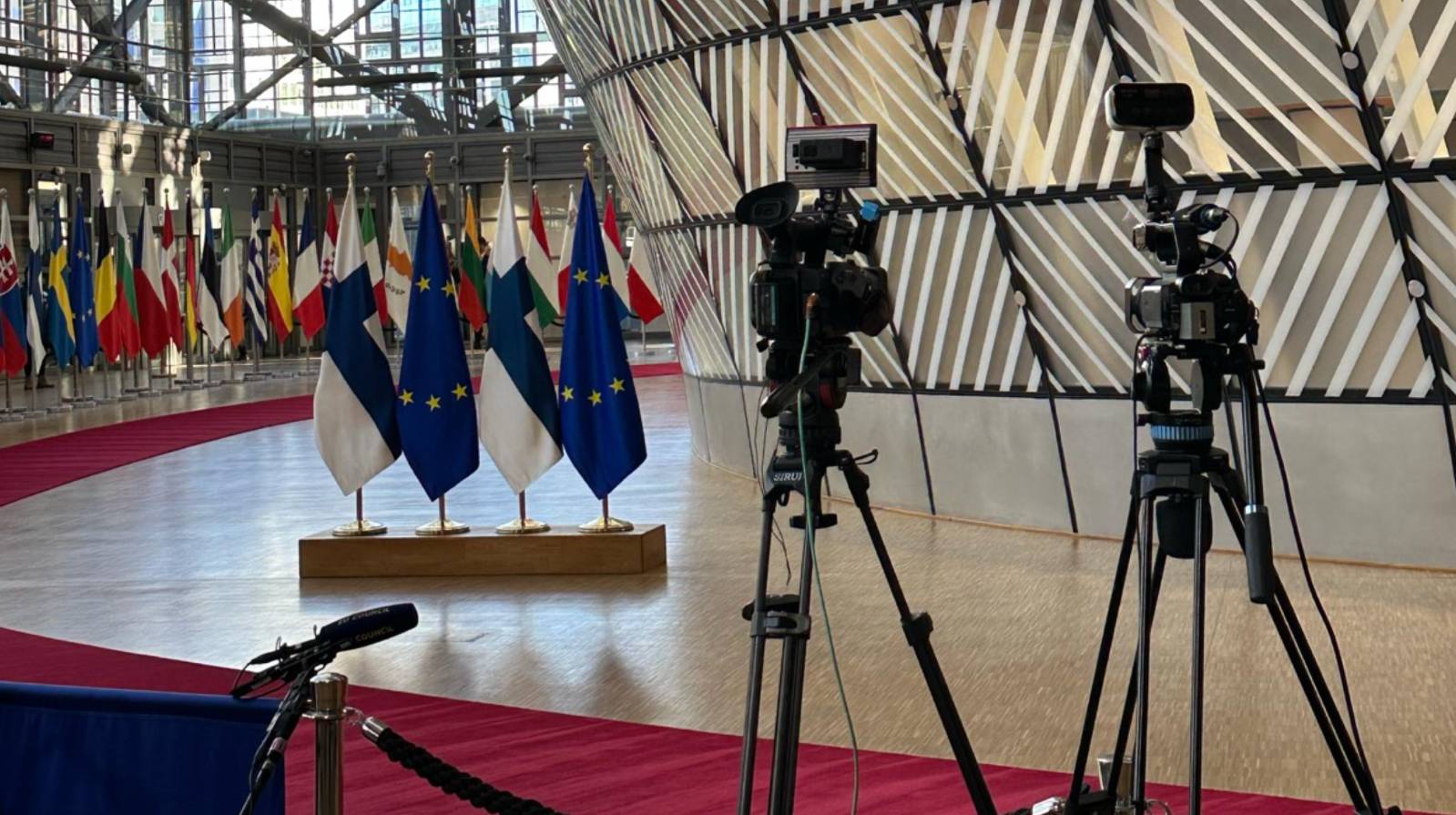
Georgian Foreign Ministry said Tbilisi would skip the EU connectivity ministerial in Brussels on November 16, citing the absence of an invitation “at an appropriate level,” while expressing commitment to “constructive cooperation” with the bloc.
The meeting, held on the sidelines of the EU Foreign Affairs Council, brings together ministers from the South Caucasus, Central Asia, Moldova, Turkey and Ukraine, according to the EU’s official announcement. Georgia was also absent from a similar meeting in Luxembourg last year, with the ministry at the time also citing a lower-level invitation as the reason for declining to attend.
“Georgia has not received an invitation at the appropriate level to participate in the events planned in Brussels on November 16, including the Connectivity Ministerial. Accordingly, no Georgian representative will participate in the meeting,” the Foreign Ministry said in the statement.
The statement came a day after Georgian media outlet Publika cited Vakhtang Makharoblishvili, Georgian Ambassador to the EU, as confirming his participation in the meeting, following media reports that Georgia again received a lower-level invitation to the meeting.
“At the same time, Georgia remains committed to constructive cooperation with the European Union and is ready to participate in meetings if invited at the appropriate level,” the Ministry added, noting that “Brussels is aware of this position.”
Kos: We Invite, But Not on Highest Level
Speaking at a news briefing on November 16, EU Enlargement Commissioner Marta Kos told Deutsche Welle that Brussels has repeatedly invited Georgian representatives, but not at the highest level.
“Now, for two or three times we have invited the representatives of Georgia to our events on connectivity, and they never came,” Kos said. “So we try to engage, we invite them. They don’t want to come. We don’t invite on the highest level.”
“We are looking for the engagement; we wanted to have dialogue on the visa liberalization, it was not possible, so, I hope that the Foreign Affairs Council in January […] will bring some movement,” Kos added, referring to EU HR/VP Kaja Kallas’ earlier announcement of a “deeper discussion with the foreign ministers regarding Georgia in January.”
Separately, responding to a question from Euroscope, the commissioner said the EU doesn’t want Georgia “excluded from these very important activities we do in the fields of trade, transport, energy and digital.” Kos, however, said that, in this direction, too, “there are conditions.”
“We will invite them again and again,” she said. “I believe that we have to be engaged. But of course they also have to deliver.”
Kobakhidze Expects ‘Dignified Invitation’
Meanwhile, Georgian Dream Prime Minister Irakli Kobakhidze criticized the level of Georgia’s invitation, reiterating his earlier calls for a “dignified invitation.”
“The Georgian people deserve a fair and healthy approach, which we do not see today,” Kobakhidze told journalists during a November 16 press briefing. “Where our country receives a dignified invitation, it will be appropriately represented. Where we see a different attitude, we will respond accordingly.”
Commenting on Georgia’s exclusion from the EU Enlargement Forum, Kobakhidze accused European officials of acting against Europe’s interests, saying, “For us, this is further confirmation that the European bureaucracy is not acting in accordance with Europe’s objective interests.”
The relations between Georgia, which became an EU candidate country in 2023, and Brussels worsened amid the Georgian Dream government’s anti-democratic moves and anti-EU discourse. The EU said in November 2025 that Georgia is a candidate country “in name only” and moved to suspend visa-free travel for Georgian holders of diplomatic and service passports. Brussels has also repeatedly stated that the bloc has reduced high-level contacts with Tbilisi amid strained relations.
In its November 4 enlargement report, the European Commission pointed to Georgia’s “continued backsliding” and democratic deterioration, saying its EU integration “could resume” if the authorities “change course.” The Commission also warned that Georgia’s failure to address democratic concerns could put its visa-free regime with the EU at risk “more generally.”
Meanwhile, Georgian officials have claimed that they seek to engage in “open and constructive dialogue” with the EU “on the basis of mutual respect.”
Also Read:

