

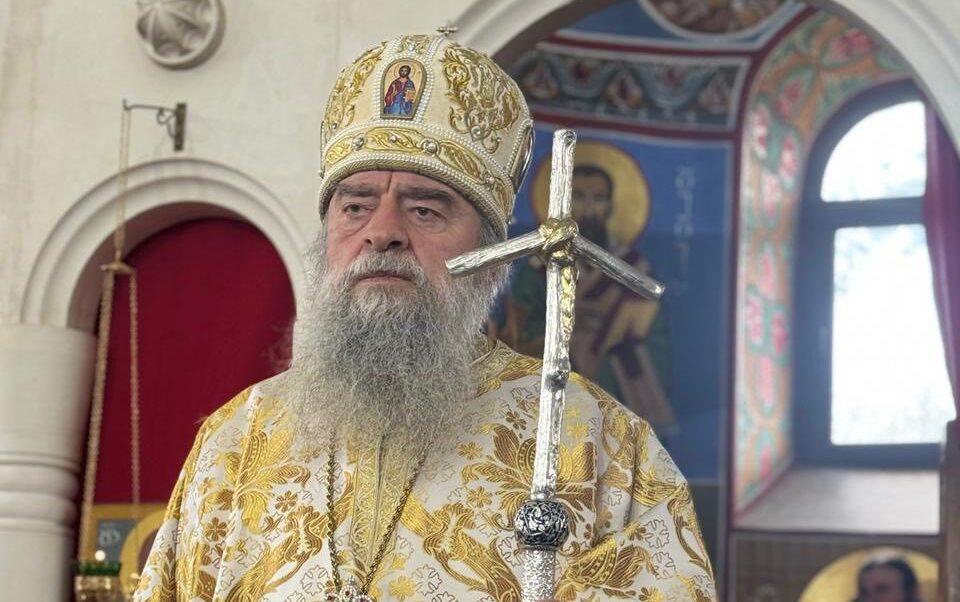
Georgian Dream government has found itself under pressure as members of the Orthodox clergy, including senior bishops, have continued to openly criticise its policies. The tensions have drawn public attention, with critics believing this is what may have prompted the ruling party to consider surrogacy ban legislation as a way to win back the Church’s sympathies.
The unease started when Metropolitan Iobi of the Ruisi and Urbnisi Diocese, one of the three shortlisted candidates in the patriarchal elections earlier this year, took time to criticize the government and its policies in his lengthy November 10 sermon, even suggesting electing a “better” government in the future.
The remarks marked the first major tension between the clergy of the Georgian Orthodox Church and the government after Shio III was enthroned as a new Patriarch following the death of Ilia II, the long-serving and influential leader of the Church. The metropolitan’s remarks at the time drew solidarity from other members of the clergy, while some of the ruling party members, as well as pro-government media and figures, responded with criticism, including calling the statements “irresponsible.”
Speaking during another sermon on November 21, Iobi returned to his November 10 remarks, when he had called authorities “faithless” and “un-churchly.”
“When I said that this government was faithless and un-churchly, they showed their true face,” he said. “Through their attitude, through their reaction… They did not insult me; they insulted God and the Church. This showed that they were not believers,” Iobi said.
Later, speaking to TV Pirveli, the metropolitan also said he had previously supported Georgian Dream but felt that the party had changed course and that speaking out against it had become necessary.
“I used to support Georgian Dream and stand by it, but when I saw that it had already deviated from its course and that a different situation had emerged, it became necessary to expose them. If they correct themselves, take these remarks into account, and some changes take place in Georgia, I may support them again,” he said.
From Trading Criticism to Surrogacy Ban?
Metropolitan Iobi’s initial sermon on November 10 prompted criticism from Georgian Dream figures and pro-government media, who accused him of making political statements from the pulpit. Georgian Dream MP Levan Machavariani called the sermon “irresponsible” and said it was regrettable for a high-ranking cleric to use the pulpit for political statements. MP Mariam Lashkhi responded to questions about Iobi with the brief remark: “May God forgive him.”
Separately, Lasha Natsvlishvili, a prominent pro-government figure and former public relations consultant for the party, went so far as to make offensive remarks in his November 11 Facebook post through vulgar wordplay apparently referring to the Metropolitan’s name. The post drew backlash towards him, leading the Interior Ministry to fine him GEL 2,500 (USD 960) over a public insult.
Some members of the clergy, including Svaneti Metropolitan Ilarioni, backed Iobi, echoing his criticism of the ruling party’s policies, including pointing to demographic issues and gambling and drug addiction.
The Patriarchate’s Public Relations Service head, Archpriest Andria Jaghmaidze, also criticized the language used against Iobi, saying that some of the remarks directed at the metropolitan “go far beyond Christian morality and vocabulary” and indicated disrespect towards the Church.
Prime Minister Irakli Kobakhidze addressed the controversy on November 16, saying that “public disputes between clergy and the government are damaging to both the Church and the country”. He said the authorities did not intend to engage in such a dispute and called on others not to initiate one.
On November 23, speaking at Bodbe Cathedral on the occasion of Giorgoba (St. George’s Day), Kobakhidze stressed the importance of unity between the Church and the state.
“Unity is very important, unity between the Church and the state, between the state and the Church. Today, we are happy that through unity and together we can take care of our country,” he said.
The criticism from Metropolitan Iobi and other members of the clergy followed, among others, Georgian Dream’s recent adoption of amendments that allow holding “international gambling tournaments” in the country, a move that drew criticism from the representatives of the Georgian Patriarchate.
As tensions persisted, Georgian Dream announced on November 22 plans to fully ban surrogacy in Georgia, saying it had consulted with the Patriarchate on the issue. The sudden decision was widely attributed by Georgian Dream critics to the ruling party’s efforts to win back the sympathies of the Church.
The ruling Georgian Dream authorities and their allied media have heavily relied on religious conservatism in their rhetoric in recent years, using it both to rally support in the predominantly Orthodox Christian country and to repeatedly portray their opponents, as well as Western critics, as being against the Church and religion.
Also Read:

