



Lauren
Crimp Political reporter
Most
general electorates handed their favoured party two ticks
this election, but seven did not.
So what’s happening
when an electorate backs a candidate from one party, but
gives its party vote to another?
Victoria University
political scientist Dr Lara Greaves said it was difficult to
draw a conclusion, and each seat should be treated on a
case-by-case basis, but she noted incumbency bias,
candidates’ visibility, and strategic voting could all play
a part.
Greaves said it was incredibly hard to model
what percentage of people tried to vote strategically to
support the right or left bloc, versus how many simply
wanted the candidate they voted for to win.
It’s worth
noting, too, that the final vote count is not returned until
27 November, meaning some electorates could be added to or
removed from this list.
Auckland
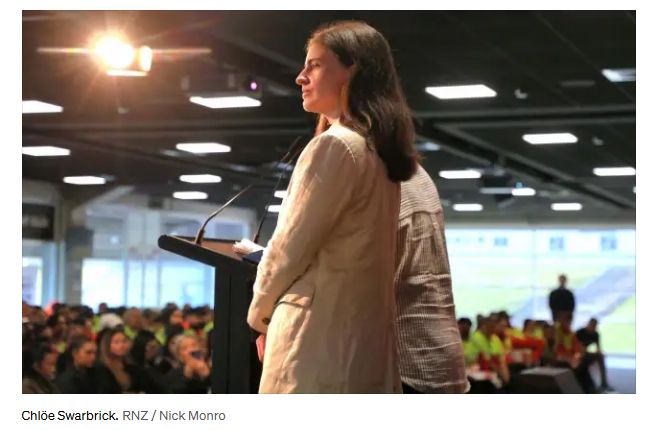
Central: a strong incumbent
Party vote went to
National, but Green incumbent Chlöe Swarbrick won the
seat.
Advertisement – scroll to continue reading
This one was a landslide in the seat: Swarbrick
got 46.6 percent of the vote while National’s Candace Kinser
reached 37.2 percent.
However, it was much closer in
the party vote, with National’s 26.6 percent beating out
Labour’s 25.8 percent (followed by the Greens’ 20 percent).
It’s worth noting that could change with special votes –
those often tend to lean left.
In 2023, National had a
far stronger party vote lead with 33.1 percent, compared to
the Greens’ 24 percent, and Labour’s 22.7
percent.
Swarbrick is a party co-leader – giving her
profile – plus, she’s considered a staunch and responsive
advocate for her electorate, Greaves said.
“There are
some local MPs that we know are really hands on in the
community and spend that time quite wisely making those
relationships and … get home as much as they can to really
be there for the community.”
Epsom: a cup of tea
hangover and a strong incumbent
Party vote went to
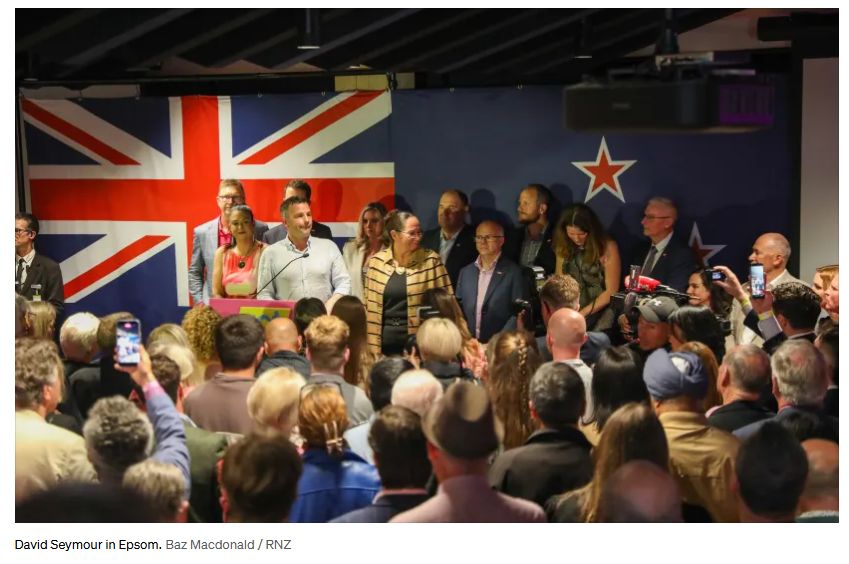
National, but ACT incumbent David Seymour won the
seat.
Epsom is home to the infamous 2011 cup of tea
deal, where National and ACT struck an agreement to attempt
(successfully) to get ACT into Parliament by backing then
ACT member John Banks to win his seat.
That had
continued since but was ditched somewhat last minute this
year, with National’s Paul Goldsmith actively campaigning
for the candidate vote.
However, it appears voters’
old habits die hard. That, and Seymour is the type of
representative who will answer the phone on a Friday
afternoon, as he has said consistently throughout the
campaign. Plus, he was the incumbent, ACT Party leader, a
minister and deputy prime minister – all of which made him a
well-known political figure.
Hamilton West: a
ministerial incumbent
Party vote went to Labour, but
National incumbent Tama Potaka won the seat.
It’s
historically been a bit of a bellwether, but National’s held
it for most of the past two decades.
This election,
Labour netted 32.4 percent while National got 29.7 percent.
In the seat, Potaka got 42.7 percent while Labour’s Myra
Williamson got 35.9 percent.
Potaka was a minister in
the last government, so he’s a known figure.
“High
profile can really work to your advantage … especially in
these close races,” Greaves said.
“Tama Potaka does
seem to have outperformed relative to what the party vote
was in that electorate.”
Kāpiti: the new seat on the
block
Party vote went to Labour, but National’s Tim
Costley won the seat.
The seat is new, having been
created last year when three electorates – Ōtaki (Costley’s
seat), Mana and Ōhāriu – became two: Kāpiti and Kenepuru.
For that reason, it’s difficult to compare the 2026 results
with previous elections. Mana was a Labour stronghold, while
Ōtaki had a National MP since 2008, except in 2020 when
Labour flipped a huge number of seats throughout the
country.
Tim Costley’s success could be down to
incumbency bias, or perhaps he is considered one of those
people who is visible within the community and turns up to
every ribbon-cutting, as Greaves puts it.
The
second-placed candidate, Labour’s Sophie Handford, has never
been an MP but is fairly well known in the community having
served as a district councillor for two terms, and
previously founded School Strike 4 Climate as a
teenager.
Maungakiekie:
a bellwether
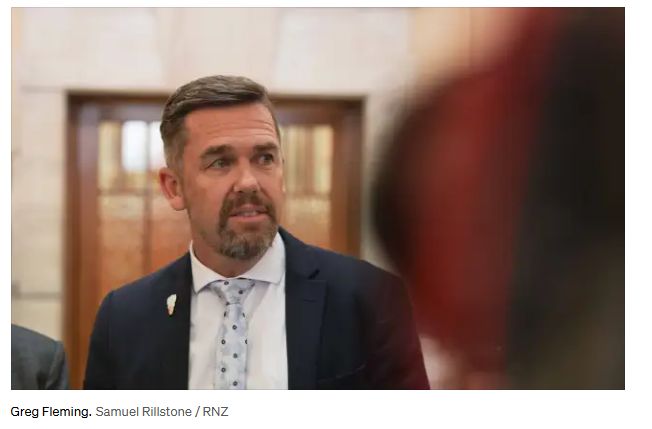
Party vote went to Labour, but National
incumbent Greg Fleming won the seat.
Fleming took the
seat comfortably with 46.5 percent of the vote compared to
Labour candidate Priyanca Radhakrishnan’s 37.1 percent. The
party vote was, again, a close one: Labour 32.4 percent,
National 30.6 percent.
While Fleming is the incumbent,
Radhakrishnan has been in Parliament since 2017 and has held
the seat before (in the “red wave” of
2020).
Maungakiekie is a bellwether, with its election
results generally reflecting those of the nation (more on
that below).
Greaves said MPs in swing seats simply
had to work harder.
“You need to knock on more doors,
you need to build relationships with more organisations in
the community and show up to more events, so there is a
little bit of an effect there.”
Nelson: the same
tight race with a different outcome
Party vote went
to Labour, but National’s Blair Cameron won the seat off the
incumbent, Rachel Boyack.
Cameron lost narrowly to
Boyack in 2023 and Greaves acknowledged he had been
campaigning hard since.
She said visibility within the
community matters – “Are they that seen face, do they show
up to every single ribbon cutting?” – but it’s difficult to
assess that from afar.
The party vote in Nelson
flipped from 2023 too. Labour netted about 29 percent in
both elections, but National’s 32.2 percent in 2023 dropped
to 27.1 percent this election.
Wellington
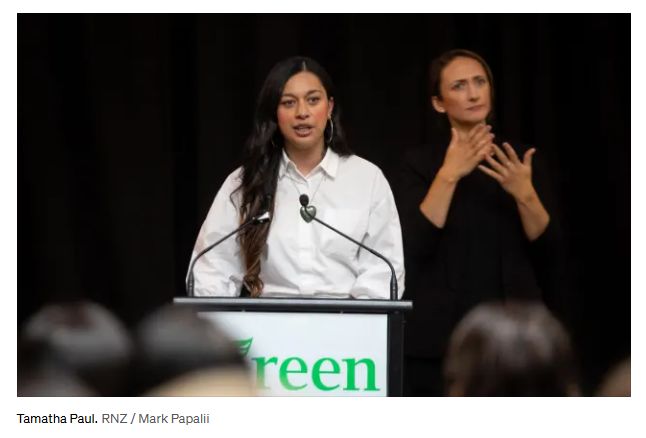
North: a new seat leaning a little less left
Party
vote went to Labour, but Green incumbent Tamatha Paul won
the seat.
This is a new seat: the Wellington Central
(Paul’s former seat) and Rongotai electorates moved north
and west respectively, and were renamed Wellington North and
Wellington Bays.
The move folded affluent,
right-leaning suburbs like Khandallah into Wellington North.
That could have been behind the shift from Wellington
Central’s two ticks Green result in 2023. However, National
achieved 21.4 percent of the vote in 2023, and just 18
percent this election.
It was a much closer race in
the seat this time around with Paul’s 39.4 percent beating
out senior Labour MP Ayesha Verrall’s 32
percent.
“Some of these [boundary] changes do change
the nature of the vote in the electorate, and that is just
something that MPs kind of have to account for,” Greaves
said.
What about the bellwethers?
A bellwether
seat tends to reflect the way the nation votes.
Traditionally, they’ve been Hamilton East, Hamilton West and
Maungakiekie. Hutt South has come into the fold since
2017.
The preliminary party vote result has Labour
ahead by a whisker – 29.4 percent to National’s 29.2
percent.
This election the party vote went to Labour
in all but one bellwether, while the seat was won by a
National candidate in all but one:
- Hamilton East:
National 31.9 percent, Labour 30.3 percent. National
candidate (Ryan Hamilton) - Hamilton West: Labour 32.4
percent, National 29.7 percent. National candidate (Tama
Potaka) - Maungakiekie: Labour 32.4 percent, National
30.6 percent. National candidate (Greg Fleming) - Hutt
South: Labour 36.6 percent, National 24.9 percent. Labour
candidate (Ginny Andersen)
Greaves noted some of
those results would flip once the special votes were in, and
said bellwethers were a hangover from the
first-past-the-post electoral system.
“The idea of a
bellwether hasn’t made sense in an MMP system because it is
relatively easy to just poll the whole party vote, and our
Parliament is meant to reflect the party vote,” she
said.
But now a “huge overhang” is in play. The size
of Parliament is set to expand by 11 seats with National and
Te Pāti Māori winning more electorates than their party
vote entitles them to.
That makes winning seats more
important, Greaves said.
“I think there’s an
interesting story there in terms of the way that people
voted for National candidates … that National candidates
were pretty successful at winning some of those electorates
that are viewed as more swing type electorates this time
around.”
New Zealand’s public broadcaster, providing comprehensive NZ news and current affairs, specialist audio features and documentaries.
Radio New Zealand is a Crown entity established under the Radio New Zealand Act 1995. Radio New Zealand News are vital elements in our programming, providing impartial news and information to New Zealanders every day. Radio New Zealand (RNZ) provides listeners with exciting and independent radio programmes in accordance with the Radio New Zealand Charter.

