



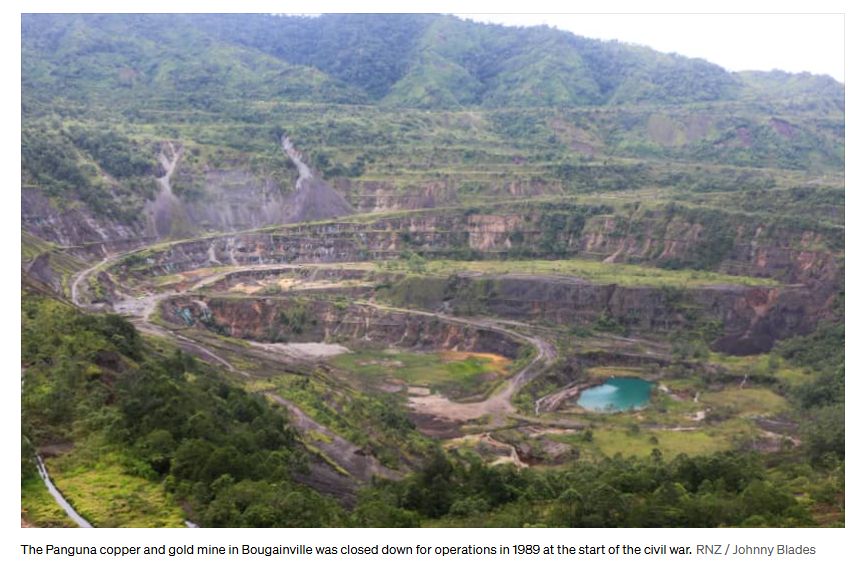
A
major mining company that ran Bougainville’s Panguna copper
mine has agreed to help fund support for responses to the
mine’s environmental and human rights impacts.
Rio
Tinto, along with Bougainville Copper Limited and the
Autonomous Bougainville Government (ABG), has agreed with
Panguna community leaders to establish a fund
As part
of this collective effort, Rio Tinto will contribute US$250
million to the fund.
A community leader and lead
complainant, Theonila Roka-Matbob, said it marked an
important step in addressing the devastation left by the
Panguna mine almost four decades ago.
“No amount of
money will restore the damage caused in the environment in
Panguna,” she said.
“But this sets a foundation for us
to invest in addressing the environmental issues and invest
in our children’s future as well.”
The Human Rights
Law Centre said the agreement follows an independent
assessment of environmental and human rights impacts from
the mine since closing in 1989.
The closure of
operations was forced by Bougainville’s civil war, which the
mine played a central role in sparking.
Rio Tinto has
agreed to support responses to impacts identified through
the Panguna Mine Legacy Impact Assessment
(PMLIA).
Advertisement – scroll to continue reading
According to the centre, the fund is intended
to support practical responses to impacts identified in the
PMLIA in the river and delta areas.
There will also be
delivery of social projects to communities across all
impacted areas identified, including the mine, port and town
areas where mine redevelopment activities are
underway.
The fund’s operations will remain separate
from future mine and port redevelopment efforts being
considered by the ABG with the people of
Bougainville.
Roka-Matbob said the most critical thing
was to address accessibility.
“Accessibility to clean
drinking water that is safe and secured, because that means
permanent security for the people.
“And infrastructure
in bridges that can make people’s accessibility to trade, to
school, to health, much easier.”
Detailed remedy
priorities and the scope of funded projects are to be
developed in consultation with communities, with resulting
activities to be aligned with the UN Guiding Principles on
Business and Human
Rights.
New Zealand’s public broadcaster, providing comprehensive NZ news and current affairs, specialist audio features and documentaries.
Radio New Zealand is a Crown entity established under the Radio New Zealand Act 1995. Radio New Zealand News are vital elements in our programming, providing impartial news and information to New Zealanders every day. Radio New Zealand (RNZ) provides listeners with exciting and independent radio programmes in accordance with the Radio New Zealand Charter.

