



Craig
McCulloch Deputy Political Editor
Parliament’s
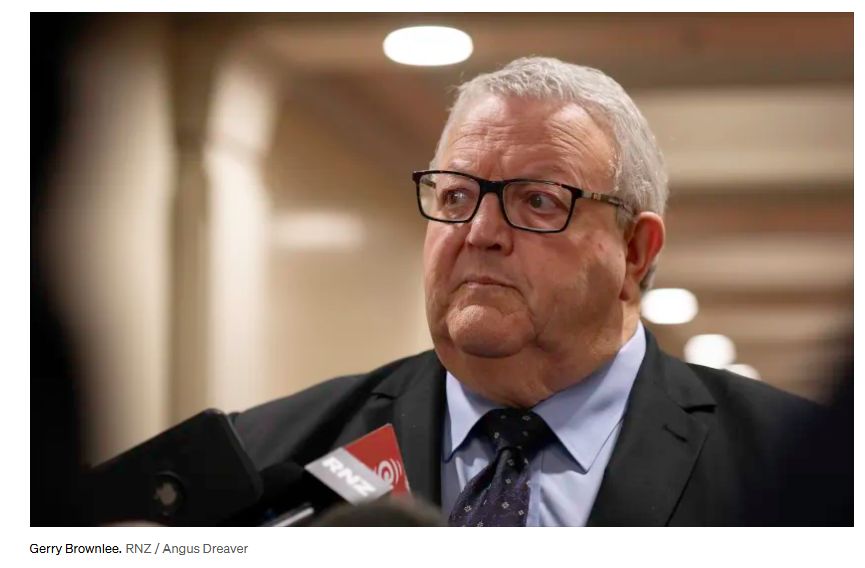
outgoing Speaker Gerry Brownlee has cautioned political
parties against rushing to form a government before
Christmas, suggesting such pressure could lead to a poor
deal.
The senior
National MP levelled the warning on RNZ’s Nine to
Noon on Tuesday morning, noting that concessions made to
ACT and New Zealand First in the last coalition agreement
may have cost his party support.
Brownlee suggested
the negotiators take the time required to get a good deal
rather than race to meet an arbitrary deadline.
“If
there is massive pressure to get a government before
Christmas – it doesn’t matter who’s in the negotiating room
– they’ll feel that public pressure,” he said.
“Maybe
it might be better just to say, ‘Well, if it is another two,
three weeks, does that really make a difference?'”
On
the preliminary election results, the existing coalition
holds a narrow majority, with 67 of the 131 seats in
Parliament. But that could yet change when the official
count, including roughly 400,000 special votes, is published
on 27 November.
Advertisement – scroll to continue reading
Asked to reflect on the result,
Brownlee acknowledged National’s low party support – just 29
percent – but pointed to its success in 42
electorates.
“[That] does not indicate any lack of
confidence in a political party.”
He suggested
National’s support had taken a hit due to the influence of
its partners in the three-way coalition, including
concessions like ACT’s Treaty Principles Bill.
“There
were some decisions made that perhaps the wider population
didn’t really appreciate,” he said.
“Sometimes those
things overshadow the good things that were
done.”
Brownlee would not say whether National had
given away too much in the negotiations three years ago,
saying he had not been in the room.
Brownlee floats
MMP shake-up
Brownlee also nodded towards the effect
of strategic voting on National’s support, saying the
discussion appeared to empower or encourage people to split
their vote.
“Clearly people want to have a dollar each
way.”
Brownlee said that practice could lead to much
larger overhangs and Parliaments in future.
He said
MMP could do with “a little bit of work” to address that. He
suggested a different electoral model altogether, known as
the Supplementary Member system, where the party vote would
determine only the allocation of list seats, rather than the
make-up of Parliament as a whole.
As an example,
Brownlee said Parliament could have 60 electorate MPs and 60
list MPs. A party winning 30 percent of the vote would
receive 18 list MPs, on top of the electorates it
won.
Such a change would prevent the kind of overhang
seen this election but would likely result in smaller
parties receiving significantly fewer MPs.
New
Zealanders opted against replacing MMP in a 2011 referendum,
with 58 percent backing the existing system and 42 percent
voting for change.
Voters were also asked which
alternative they preferred: First Past the Post topped the
list with 47 percent of valid votes, followed by
Supplementary Member on 24 percent.
That Supplementary
Member model proposed 90 electorate seats and 30 list
seats.
New Zealand’s public broadcaster, providing comprehensive NZ news and current affairs, specialist audio features and documentaries.
Radio New Zealand is a Crown entity established under the Radio New Zealand Act 1995. Radio New Zealand News are vital elements in our programming, providing impartial news and information to New Zealanders every day. Radio New Zealand (RNZ) provides listeners with exciting and independent radio programmes in accordance with the Radio New Zealand Charter.

