

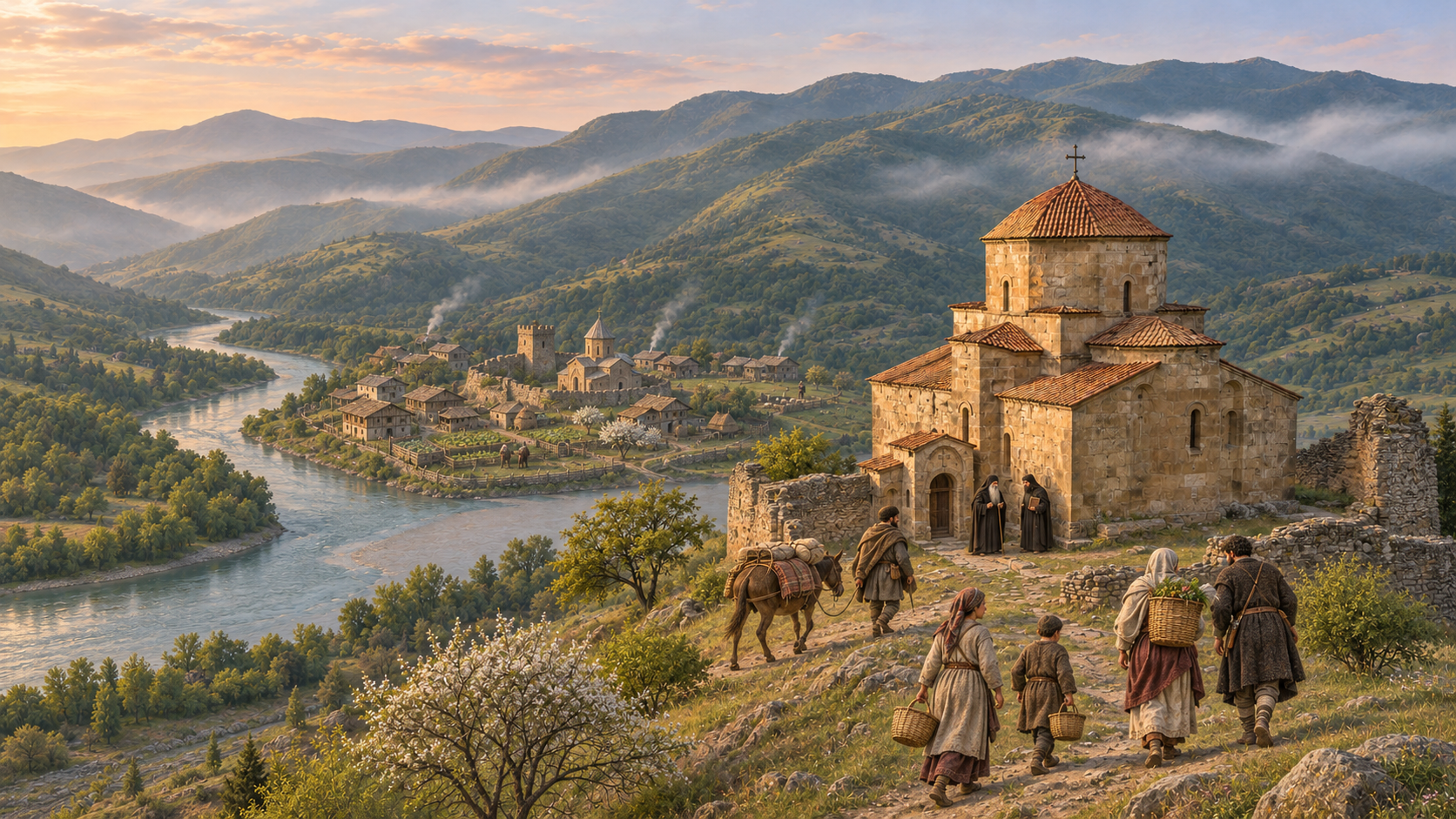
This article explores the rich history of Georgia from its ancient kings and queens to the Golden Age, imperial and Soviet times and regaining independence. Located at the crossroads of Europe and Asia, Georgia has continually been able to adapt to any political changes and maintain its unique language and culture.
Georgia is located in the South Caucasus region, between the Black Sea and the Greater Caucasus Mountains. Due to the location of the country, Georgia has always acted as a link between Europe, Asia and the Middle East. This led to many opportunities for trade and culture, but also meant they were surrounded by some powerful neighbours.
With a history spanning thousands of years, Georgia (or Sakartvelo) has seen many influential changes throughout the years; from Colchis and Iberia to embracing Christianity, a glorious medieval period, being oppressed by foreign countries and fighting for independence. This has led to the importance of language, religion, culture and independence.
1. Ancient Georgia
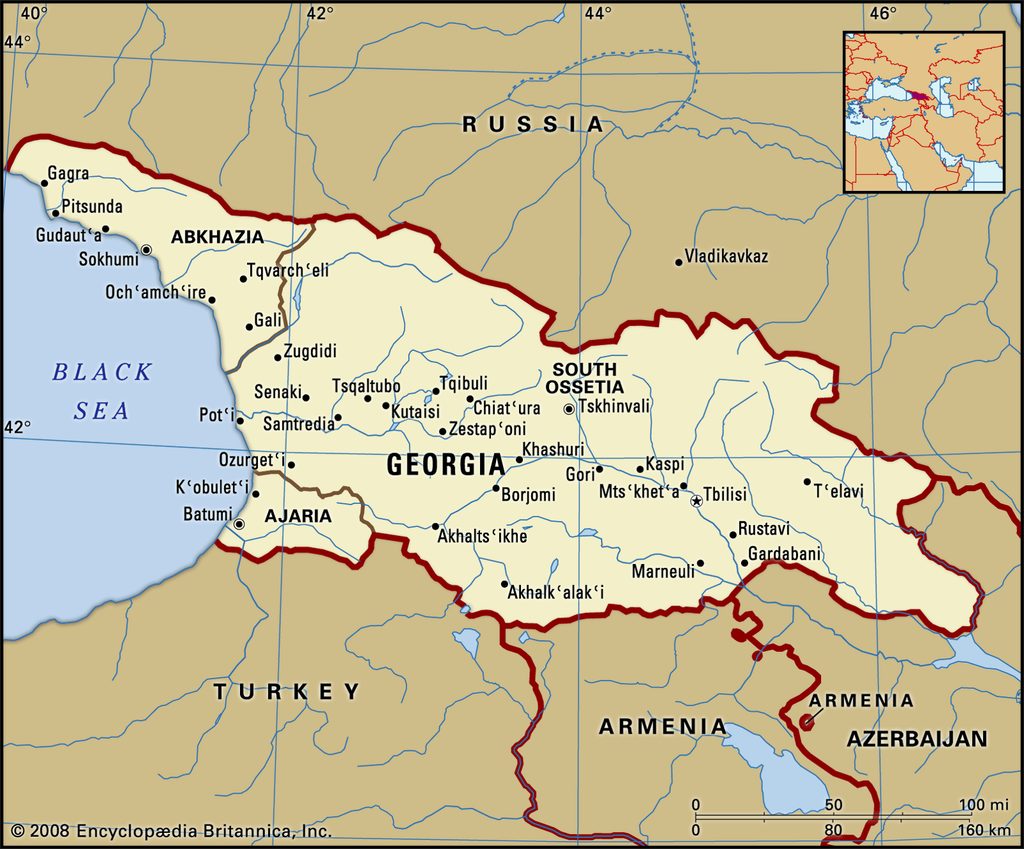
Georgia began its long history with Ancient Kingdoms; Colchis and the Kingdom of Iberia (Kartli). Colchis began to flourish on the eastern coast of the Black Sea. This became part of the trading network.
Colchis is well-known from Greek myths where Jason and the Argonauts searched for the Golden Fleece. While this is a myth, it shows how Georgia has always been an important area.
On the Eastern side, the Kingdom of Iberia developed. The capital was Mtskheta and it built up connections with key players in the region such as Rome and Persia. This city is known for it’s rich history and religious significance, as detailed in the Historical Monuments of Mtskheta from UNESCO. Both Colchis and Iberia provided a solid foundation for Georgia’s development.
| Note Mtskheta was the capital of ancient Iberia and is one of the most important places in Georgia. It is also of great religious significance and its landmarks are listed on the UNESCO World Heritage Site. |
2. Embracing Christianity
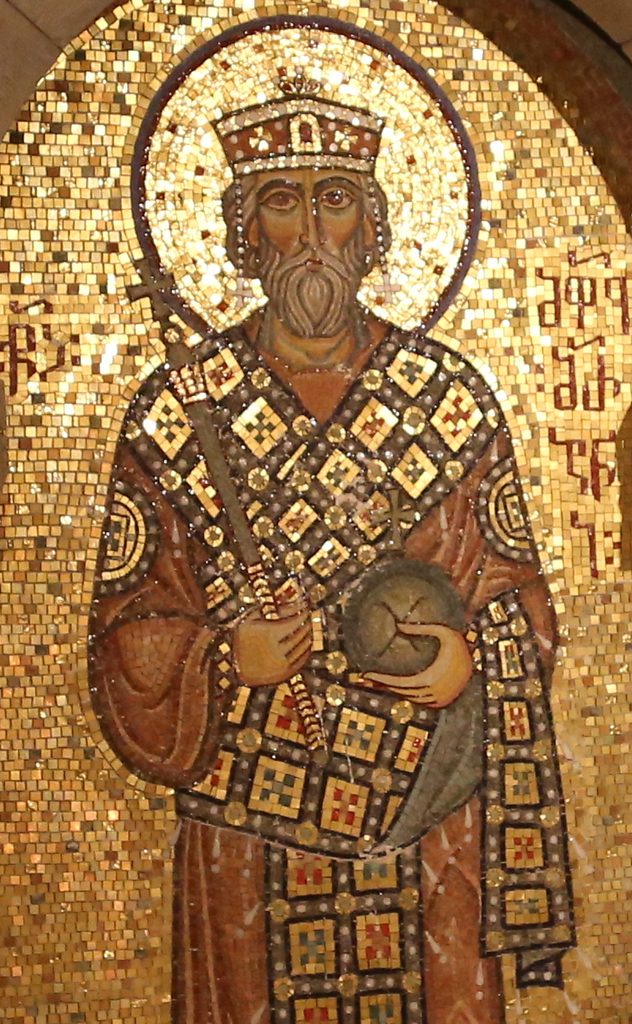
One of the most important moments in Georgia’s history was when they embraced Christianity. It is traditional that the Kingdom of Iberia converted after Saint Nino persuaded King Mirian III. In 337AD Christianity became the official religion. Mtskheta played an important role due to it’s churches from UNESCO.
This change in religion led to the development of education and culture. Religious buildings such as churches and monasteries helped protect books and culture. Georgia developed their own style of religious buildings.
The Georgian Orthodox Church became very important to the nation. Throughout times of political division and foreign occupation, religious buildings often helped protect the language, education and culture.
| NOTE Georgia are one of the earliest countries to embrace Christianity as their official religion. Around 337AD. |
3. Medieval Golden Age
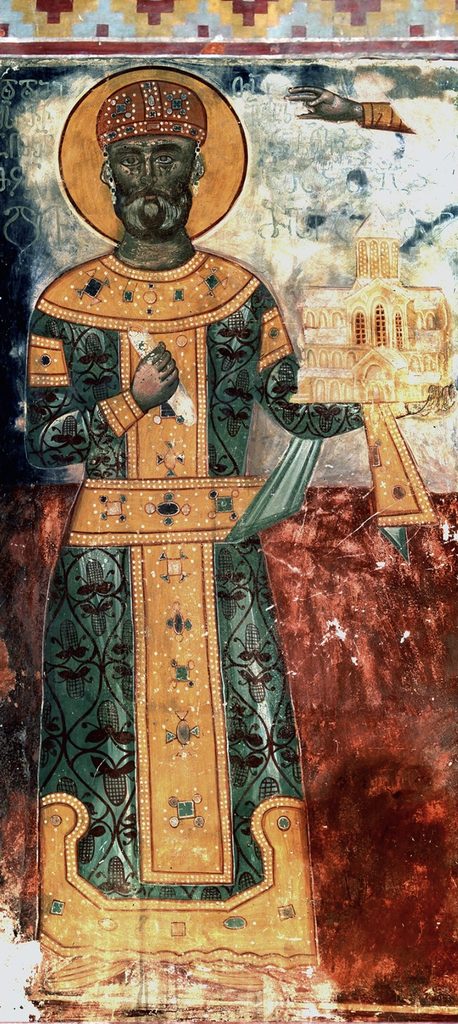
The eleventh to early thirteenth century is well-known for being Georgia’s Medieval Golden Age. Georgia developed its influence, improved its organisation and saw great developments in architecture, literature, education and culture.
During the reign of King David IV (David the Builder) (1089-1125), the army and organisation was improved and the king’s power strengthened. He won a huge battle against the Seljuk forces during the Battle of Didgori (1121), this became a key moment in Georgian history. David supported education and religion; he built the Gelati Monastery near Kutaisi in 1106. This became an influential centre of education.
Queen Tamar ruled from 1184 to 1213 and this time is known for Georgia reaching its peak during the middle ages. This time was politically powerful and Georgia had a lot of influence. Some famous literature was produced during this time, such as “The Knight in the Panther’s Skin” written by Shota Rustaveli.
| DID YOU KNOW? David the Builder founded the Gelati Monastery. This became an important centre of education and is recognised for its incredible cultural significance by UNESCO. |
4. Invasions and Division
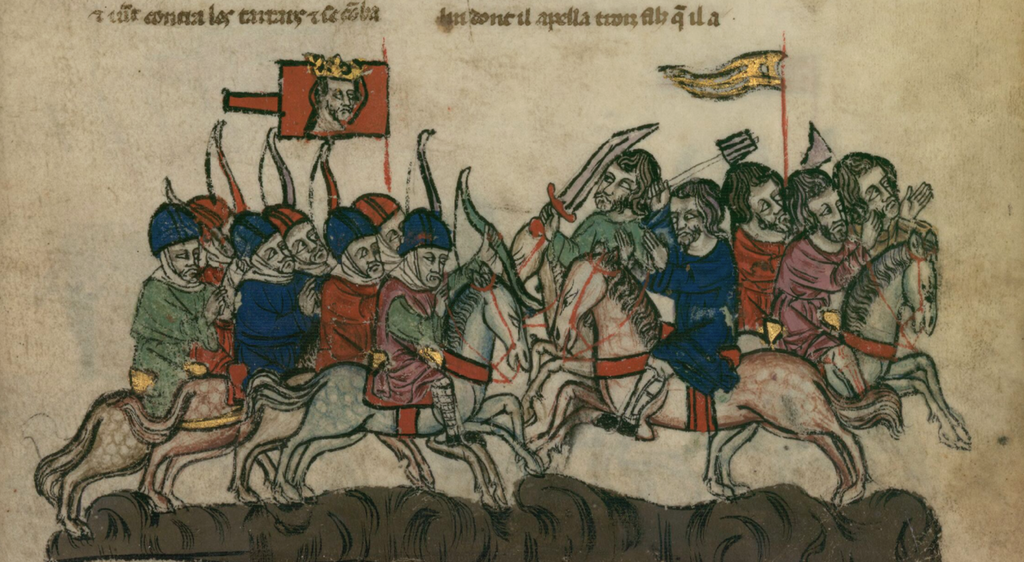
Following the Golden Age, Georgia suffered through many problems. During the thirteenth century, the Mongols invaded causing issues for the monarchy. Later in the late fourteenth century Timur attacked.
Some rulers tried to regain some power in Georgia but slowly the country became divided. By the end of the fifteenth century there were several kingdoms and principalities such as Kartli, Kakheti and Imereti.
This caused the areas of Georgia to become vulnerable due to the clash between the Ottomans and Persians. This led to many battles being fought over the years. However, despite suffering many pressures, the Georgians protected their language, religion and culture.
5. Russian Expansion
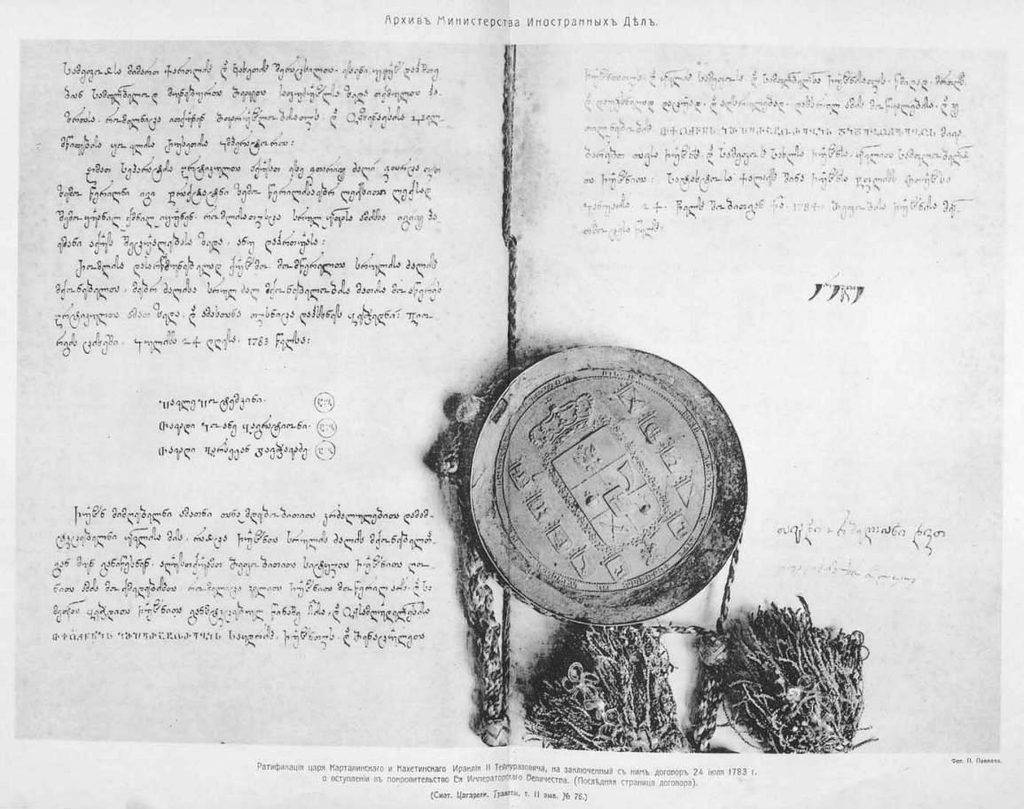
By the eighteenth century, Georgian rulers were looking to Russia for support against the Ottomans and Persians. In 1783 King Erekle II of Kartli-Kakheti signed the Treaty of Georgievsk with Russia. This was to gain protection but keep the organisation within the kingdom.
Unfortunately, this didn’t provide long-term independence. In 1801 Kartli-Kakheti was annexed by the Russian Empire. Over the next few decades the rest of Georgia was incorporated into the empire. This caused traditional structures to weaken and in 1811 the Georgian Orthodox Church lost autocephaly. To understand more about how Georgia was politically affected throughout history see Encyclopaedia Iranica.
A Georgian national and cultural revival occurred during the nineteenth century. Authors and public figures supported the Georgian language, literature and education. Ilia Chavchavadze was one of the most well-known voices. This helped to refresh the national pride.
| KEY DATE Kartli-Kakheti was annexed by Russia providing a huge expansion of imperial rule in Georgia. |
6. The Democratic Republic of Georgia (1918-1921)
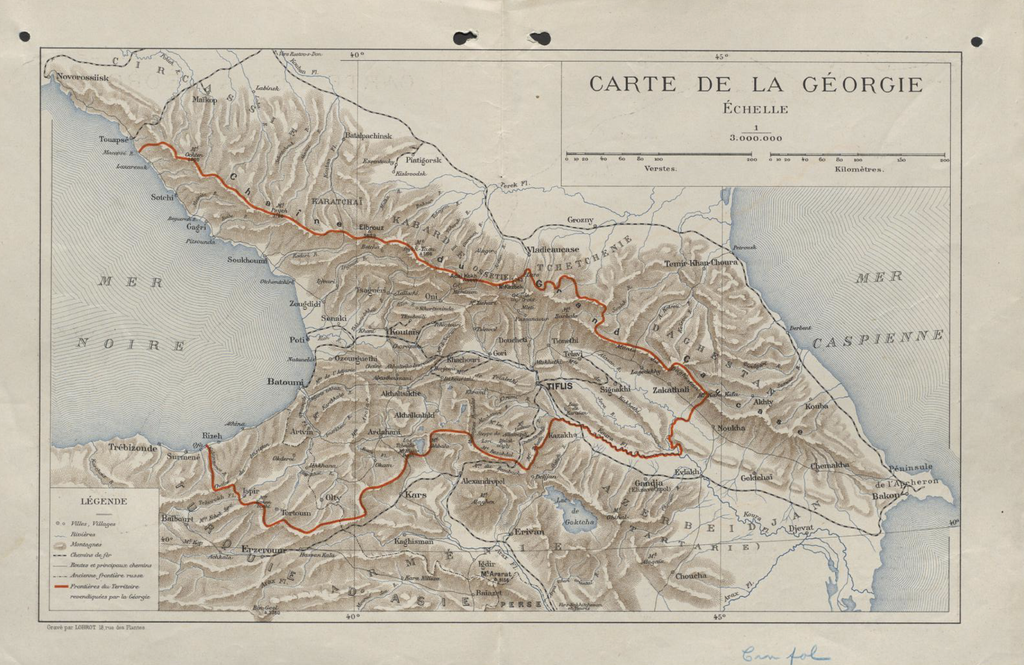
Due to the Russian Revolution (1917) and Russian Empire falling apart, Georgia declared independence. On the 26th May 1918 Georgia gained independence and became the Democratic Republic of Georgia.
This introduced Georgia to representative political structures and they tried to gain international recognition. While this wasn’t long lived, it was an important step in modern Georgian history. This provided Georgia with democratic experience.
However in February 1921 the Red Army invaded Georgia. The Soviets took control of Georgia and the country ended in March. Georgia was incorporated into the Soviet Union.
7. Soviet Georgia
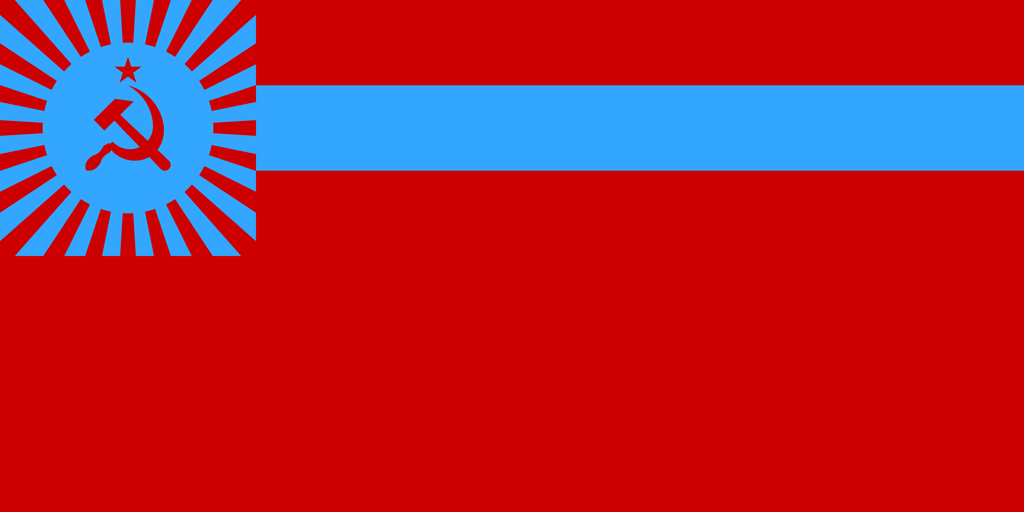
Following the invasion in 1921, Georgia became part of the Soviet Union. Initially, they were part of the Transcaucasian Soviet Federative Socialist Republic but was made a separate Soviet Republic in 1936.
Throughout the Soviet decades Georgia industrialised and urbanised. Tbilisi became a large centre of government and culture. Georgia continued to produce influential authors, musicians, film makers and artists. However, there were strict political rules.
There was also a time of oppression. During the rule of Joseph Stalin, there were many purges, executions, imprisonments and deportations across the whole of the Soviet Union including Georgia. Stalin was born in Gori, now Georgia.
By the late 1980s there were increasing calls for political change and independence. On the 9th April 1989 Soviet troops violently dispersed a peaceful protest in Tbilisi. This caused many deaths and injuries which made the public even more against the Soviet Union. This became a key moment for independence.
8. Regaining Independence (1991)
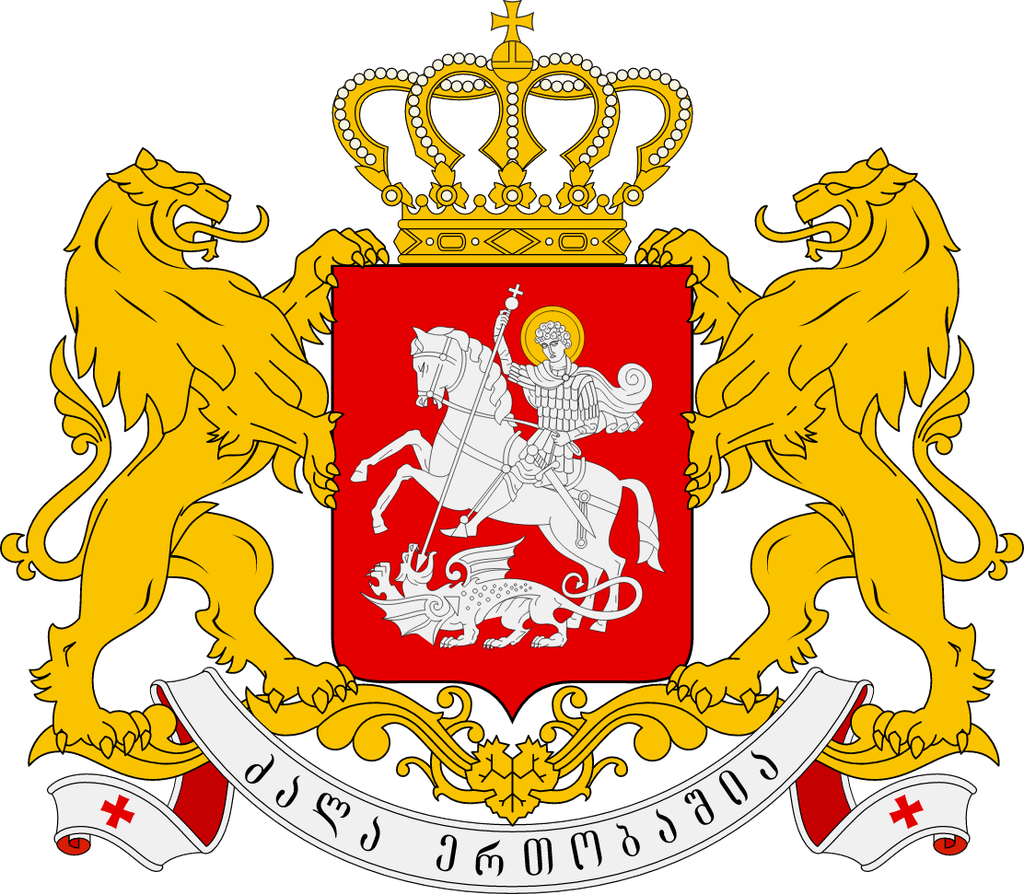
A referendum was held on the 31st March 1991 and showed the public wanted independence. The Supreme Council declared Georgia had regained independence on the 9th April 1991. This was based upon the legal and historical background of the 1918 Republic. This can be seen in the Act of Restoration of State Independence.
This was a challenging time for Georgia. There were many political instabilities, economic issues and conflicts. Many conflicts occurred such as Abkhazia and South Ossetia. This meant Georgia had a long process of creating government structures, improving their economy and becoming part of the international world.
| TWO KEY DATES The 26th May is Independence Day celebrating the declaration of independence in 1918. Georgia regained independence from the Soviet Union on the 9th April 1991. |
9. Modern Georgia
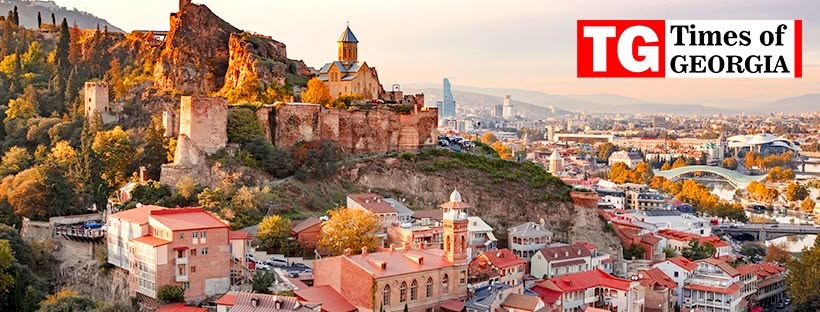
Georgia is now an independent state in the South Caucasus. The country has a rich history and modern Georgia reflects this. Georgia has tried to improve its international relations, improve its economy and improve its organisation. Tourism has also increased as more people visit Georgia to see the beautiful landscapes, food and historical sites.
Georgia has a rich history with places like Mtskheta, Gelati Monastery and the mountain villages of Upper Svaneti. The language, music, literature, food and religion are all very important parts of Georgian culture.
The geographical location has caused Georgia to have good international and regional relations. Looking forward Georgia will look back at their history.
Conclusions
Georgia has a rich history. It is not only full of different dynasties and invasions but shows how the communities have worked hard to keep their culture. From Colchis and Iberia to the medieval kingdom, imperial and Soviet times and regaining independence, each time has left its mark.
Understanding Georgia’s history helps us to understand more about modern society and how important it is to protect their language, culture and independence. Explore Times of Georgia to read more historical articles and other latest updates.


