


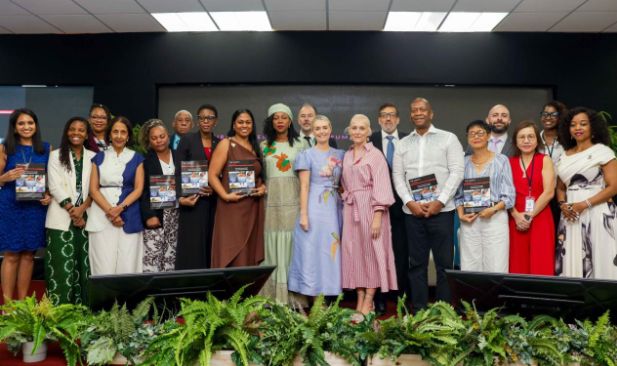
The
Lancet Oncology Commission report on Cancer in the
Commonwealth was launched today at the 2026 Commonwealth
Heads of Government Meeting (CHOGM) in Antigua, during the
side event ‘Cancer Control and Health Systems
Strengthening in the Commonwealth’. The event brought
together researchers, clinicians, policymakers, civil
society representatives, First Ladies and spouses of
Commonwealth Heads of Government.
The report
is the result of a three-year collaboration between The
Lancet Oncology Commission and the Commonwealth
Secretariat. It sets out an urgent agenda to address the
rapidly rising cancer burden across the Commonwealth’s 56
member countries, home to around 2.7 billion people, while
delivering wider health and economic benefits.
Key
findings include:
- Cancer carries substantial
economic and social costs, making effective control a
strategic necessity for an economically resilient
Commonwealth. - Comprehensive scale-up could generate
an estimated return of US$16–US$24 for every US$1
invested, depending on national income, geography and
valuation method used. - Annual new cancer cases
worldwide are projected to reach 35 million by 2050—77%
more than in 2022. - Expanding treatment and imaging
capacity, while improving the quality of care, offers the
greatest opportunity to avert cancer deaths.
Advertisement – scroll to continue reading
The
launch opened with a session chaired by Cabinet
Minister in Antigua and Barbuda, Minister of Housing and
Works and Member of Parliament for St. John’s Rural East,
H.E. Maria Vanessa Bird-Browne.
Presenting
the report findings, Chair of The
Lancet Oncology
Commission, Professor Rifat Atun,
said:
“A comprehensive scale-up of
treatment, imaging, and quality of care will deliver
benefits of between $140 and $793 billion, a return of
between four dollars and twenty dollars on every dollar
invested.
Investment in cancer control also pays
dividends beyond the clinic: in 2022 alone, health
expenditure on cancer control generated an estimated $82·9
billion in gross value added across Commonwealth economies
through direct, spillover, and induced effects, benefits
that strengthen national productivity and fiscal resilience
well beyond health ministries.”
Cancer care in the
Commonwealth
The report introduces the Commonwealth
Observatory for Health Systems and Cancer Control. The
database brings together data on around 800 variables
related to health systems and cancer control in the
Commonwealth, including essential contextual information on
countries, such as demographic, epidemiological, and
economic indicators, and analyses of national cancer control
plans.
The Officer-in-Charge of the
Social Development, Youth and
Gender Division at the Commonwealth Secretariat, Jennifer
Namgyal said:
“The Commonwealth’s
strength lies in partnership and collective action. We bring
member countries, experts and strategic partners together
around shared priorities, connecting evidence, policy and
implementation to support country-led
solutions.
“The Lancet Oncology Commission shows
what this model can achieve: combining evidence and
expertise with the Commonwealth’s convening power to
identify practical opportunities for stronger cancer control
and health systems. Through partnership, knowledge exchange
and collective learning, we can build more equitable and
resilient health systems and improve outcomes across the
Commonwealth.”
More than 14 First Ladies and spouses
of Commonwealth Heads of Government attended, including
Mr Cyril Laryea, the spouse of the Commonwealth
Secretary-General, Hon Shirley Botchwey.
Participants encouraged the spouses, many of whom are
prominent cancer-care advocates, to use their public
profiles to draw greater attention to the growing cancer
burden.
At CHOGM,
a panel of ministers, officials and diplomats considered six
priorities for equitable cancer control across the
Commonwealth:
- Adopt targeted policies that widen
access to affordable, high-quality cancer
technologies. - Transform care delivery to improve
availability, quality and equity. - Accelerate
innovation in cancer prevention, diagnosis and
treatment. - Put patients and civil society at the
centre of policy and delivery. - Invest in education
and professional development for the cancer care
workforce. - Strengthen timely, reliable data systems
and comprehensive national cancer-control
plans.
The Commission says delivery will require
sustained political leadership, funding, inclusive
coalitions and shared tools to help countries
collaborate.
The Commission first presented
preliminary findings at the inaugural
Commonwealth Health Coordination Forum in Geneva on 16
May 2026. The CHOGM launch now brings the agenda directly to
Heads of Government, with a clear message: investing in
cancer control will save lives, strengthen health systems
and support economic
resilience.
Notes:
- The Commonwealth is a
voluntary association of 56 independent and equal sovereign
states. Our combined population is 2.7 billion, of which
more than 60 per cent is aged 29 or under. - The
Commonwealth spans the globe and includes both advanced
economies and developing countries. Thirty-three of our
members are small states, many of which are island
nations. - The Commonwealth Secretariat supports
member countries to build democratic and inclusive
institutions, strengthen governance and promote justice and
human rights. Our work helps to grow economies and boost
trade, deliver national resilience, empower young people,
and address threats such as climate change, debt and
inequality. - Member countries are supported by a
network of more than 80 intergovernmental, civil society,
cultural and professional
organisations.

