


Lillian
Hanly Political Reporter
Political
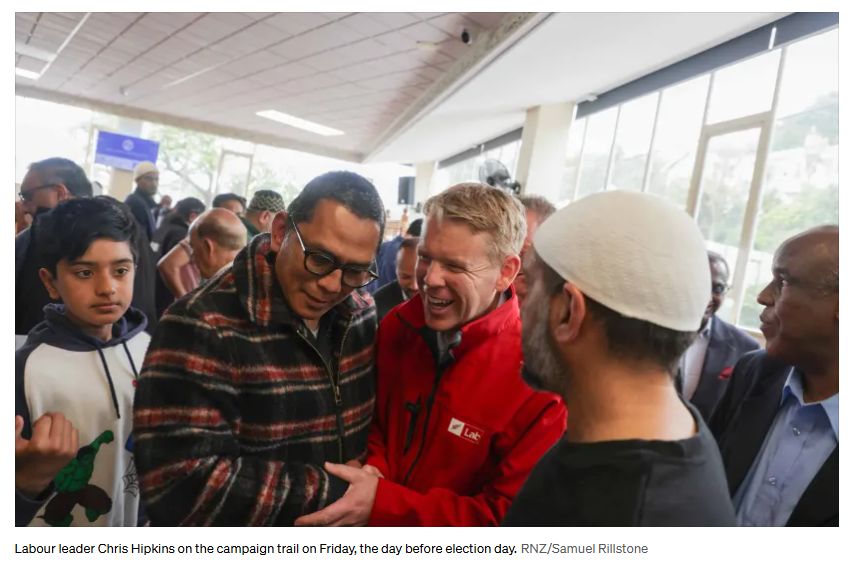
reporter Lillian Hanly has been with Labour leader Chris
Hipkins in the final days of the campaign trail, where he’s
travelled between Auckland, Hamilton and the wider
Wellington region.
Analysis: Chris Hipkins has
been quietly confident in the final week of his second
election campaign as Labour leader.
His demeanour and
mood are a far cry from the Hipkins who seemed to sleepwalk
through the 2023 election, before admitting defeat on
election night.
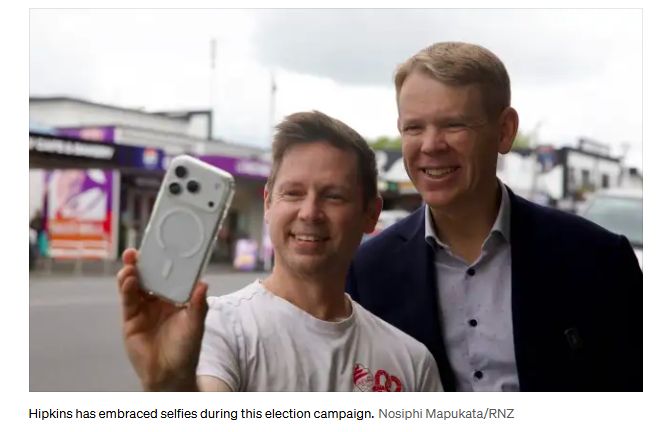
At the outset of this campaign, he
rejected any notion he hadn’t been a great campaigner last
time, but anyone who was watching saw selfies and chatting
to people didn’t come so naturally to him.
Anyone
watching this time around can see that’s changed – he’s
having meaningful engagement with people, and the party’s
insisting the reception on the ground has changed
too.
They say they’re hearing an urgency from people
to change this government.
On Thursday, Hipkins said
the party had a “very, very big ground game this election”,
which had led to more door-knocking during this campaign
than ever before.
That’s 250,000 door knocks compared
to around 150,000 in the last campaign.
Advertisement – scroll to continue reading
“That
ground game is going to make a huge difference,” he said,
and that included helping people, literally, to get out and
vote on Saturday – because this election, every vote really
does matter.
The polls are tight, but
the latest Freshwater Strategy poll on the eve of the
election putting Labour back in the thirties will give
Hipkins even more confidence his plan is working, after a
steady fall throughout the year.
The plan, though,
only seems to involve being just good enough to beat
National.
National’s saying, ‘don’t put it all at
risk’ and ‘give us three more years’, while Labour’s saying,
‘they’ve had their chance – give us another go’.
The
public – according to polling at least, with the combined
National / Labour vote in the mid-50s – seem to be saying
‘we’ve had enough of both of you’.
Is a vote for
Labour really that different to a vote for National given
their fiscal plans, excluding pay equity, are largely
similar?
Hipkins insists it is. He says that’s because
only Labour has a real plan to tackle the cost of
living.
The public seem to believe him, given Labour
is leading on the top five issues for New Zealanders
according to the latest Ipsos survey.
That is another
pre-election poll that would have given Labour a confidence
boost. The slight rise in unemployment this week also
allowed Hipkins another crack at National, saying it was a
“damning verdict on Christopher Luxon’s economic
management”.
This is all positive for Labour, but the
party only have a path to power alongside other minor
parties, and throughout the entire campaign the numbers have
been too close to call.
One of the consistencies has
been the Greens riding high and posing a real threat to
Labour’s dominance.
National’s attacks trying to
frighten people away from that scenario don’t seem to be
landing. So is it possible that Hipkins’ confidence is
founded in reality? Or is it spin?
“We are going to do
significantly better than you have been predicting,” he said
on Thursday, his confidence getting louder.
He’s also
taken heart from the
blue centre-left tsunami in the United States
midterms.
“There is a rejection of right-wing
populism around the world,” he said, adding that New
Zealanders had an opportunity to do the same
here.
There are multiple scenarios that could play out
on election night, and after the special votes are counted,
all of which could be upended with even the slightest change
in fortunes in electorates and the party vote.
The
true impact of the overhang strategy – if any – is yet to be
seen.
National’s promise at the last election to ease
the cost of living hasn’t turned into reality for
many.
Hipkins is now pledging the same, only he’s
giving himself more specific targets to be measured
on.
If he leads the next government, can he say he
made fuel costs cheaper by freezing the excise tax?
Probably.
Can he say he delivered three free GP
visits? Probably.
Can he say he put more money into
back pockets by increasing the pay of care and support
workers? Probably.
But the world’s problems aren’t
getting any simpler.
The very criticism from the minor
parties on both the left and the right that seems to be
getting them more emphatic support is that the centre
parties only tinker with their solutions.
They don’t
resoundingly resolve them.
Labour’s quietly confident
partly because National isn’t as strong
either.
Whoever does take the win for the major
parties on Saturday, it may not be a resounding
one.
New Zealand’s public broadcaster, providing comprehensive NZ news and current affairs, specialist audio features and documentaries.
Radio New Zealand is a Crown entity established under the Radio New Zealand Act 1995. Radio New Zealand News are vital elements in our programming, providing impartial news and information to New Zealanders every day. Radio New Zealand (RNZ) provides listeners with exciting and independent radio programmes in accordance with the Radio New Zealand Charter.

