



Giles
Dexter Political reporter
An
electoral law expert says there is no reason not to believe
a law change is responsible for the voter enrolment rate
slipping below 2023 levels.
The government changed the
law so that people could not enrol to vote on election day
or during the advanced voting period, instead putting a
deadline of midnight, 25 October.
The Electoral
Commission released provisional numbers on Friday morning
showing 93.6 percent of the eligible population have
enrolled (3,790,946 people), down from 94.7 percent in
2023.
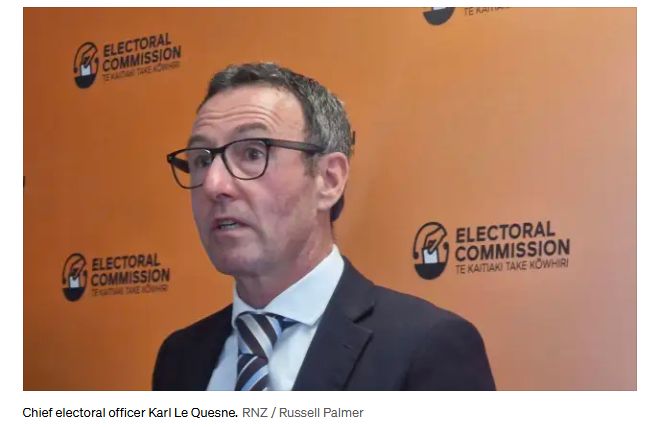
Chief electoral officer Karl Le Quesne said it
showed “good
awareness” of the change in the rules, telling
Morning Report enrolments were higher than in 2014
and 2017, and slightly lower than 2020 and 2023.
The
provisional rate for 18-to-24-year-olds is 74.2 percent,
short of the 77 percent in 2023.
A big
push to get them enrolled saw that rate rise from just
over 50 percent in July, an increase of more than 20
percentage points or 85,000 people.
Advertisement – scroll to continue reading
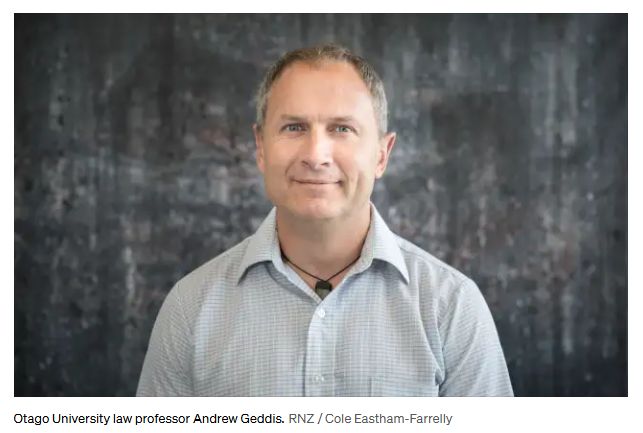
Otago University
law professor Andrew Geddis said the commission had done a
good job to get enrolments within “spitting distance” of the
last election’s numbers, but the fact remained they were
lower.
If
enrolments had hit 94.7 percent this time, the commission
said it would have meant around 40,000 extra
people.
“That means that 40,000 people’s rights have
been removed, without there being any good enough
justification to do so, as [former Attorney-General] Judith
Collins herself noted when the legislation was brought
before the House,” Geddis said.
“We can’t prove
causation, but it’s pretty strong correlation, right? It’s
what everyone thought would happen, it is what’s happened,
and so there’s no reason for us not to think that it’s the
law change that’s been responsible.”
Geddis said it
was important to recognise that not everyone who enrolled to
vote would actually vote. Total turnout in 2023 was 77.5
percent of those who were enrolled.
Politicians past
and present have been taking to social media to warn this
election will be tight.
“If it’s very close, and if
the election gets decided gets decided by maybe only 10 or
15,000 votes going one way rather than the other, then I
think we could legitimately say that the change in enrolment
numbers may well have affected who gets to govern,” Geddis
said.
“But again, there’s always going to be this
doubt as to whether the people who weren’t enrolled, whether
they would have voted anyway. We just don’t
know.”
Labour has committed to reversing the changes,
with justice spokesperson Camilla Belich saying the changes
were “disenfranchising thousands of New
Zealanders”.
Le
Quesne told Morning Report the commission always
wanted to see a much higher enrolment rate, and it would
review what it did and what it could do better, and report
back to Parliament after the election.
However, while
the commission is recording if someone has voted, it will
not be counting how many people come into a voting place but
do not vote.
Geddis said this meant the commission,
and then the select committee reviewing the election, would
be relying on “anecdata” from the scrutineers and polling
places.
“The fact there’s no, if you like, solid count
being undertaken by the Electoral Commission means that
we’ll be trying to piece together its effect from scattered
data points rather than having any sort of overall
picture.”
New Zealand’s public broadcaster, providing comprehensive NZ news and current affairs, specialist audio features and documentaries.
Radio New Zealand is a Crown entity established under the Radio New Zealand Act 1995. Radio New Zealand News are vital elements in our programming, providing impartial news and information to New Zealanders every day. Radio New Zealand (RNZ) provides listeners with exciting and independent radio programmes in accordance with the Radio New Zealand Charter.

