


*Correction:
An earlier version of this story incorrectly said Labour
promised to implement the ban in its first 100
days
Labour is pledging to get an under-16 social
media ban to select committee in its first 100 days and set
up an online watchdog that can fine technology giants that
break new rules.
If back in government Labour says it
will give people more control of their internet feed by
platforms to allow users to choose between an
algorithm-driven feed or posts only from accounts people
follow.
The new rules would mean users could switch
between those feeds at any time.
There would also be a
new ‘Digital Duty of Care’ law that would require platforms
to “identify risks and protect Kiwis from harmful content
and addictive designs”.
Any breaches of these new
rules would be assessed by a new independent online
regulator, which would have powers to “enforce safety
standards, investigate harmful practices and take action
against companies that break the rules’.
The new duty
of care law would cover stronger protections for under-18s
against harmful content, bullying and design features that
encourage excessive use or damage self-esteem, the party
says.
It would also have “stronger protections against
deepfake abuse, including non-consensual sexual images, and
powers to take down harmful nudify apps and
sites”.
Advertisement – scroll to continue reading
Lastly the new law would cover reponsibilities
for companies and make platforms identify risks, detail what
they’re doing to keep people safe and fix the problems when
things go wrong.
The
government introduced a bill to ban social media for
under-16s in August but it did not have support from
National’s coalition partners New Zealand First or
Act.
It was introduced so close to Parliament rising
for the election that National’s Christopher Luxon and Erica
Stanford said it would not get its first reading this
term.
Labour said it would support the bill at first
reading to allow it to go to select committee but the Leader
of the House Louise Upston made clear it would not go before
the House as there wasn’t enough time.
Addressing
reporters at Parliament, Labour sought to differentiate its
proposed social media ban from the National Party’s
policy.
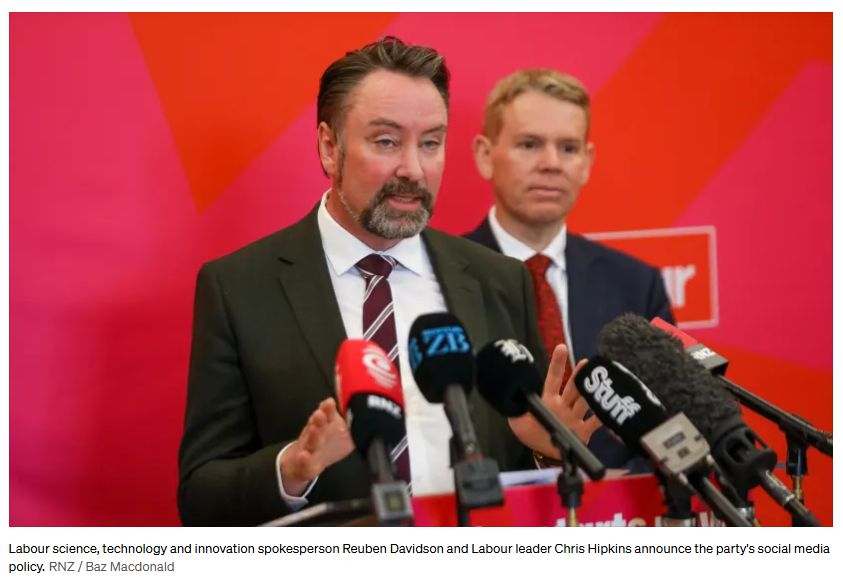
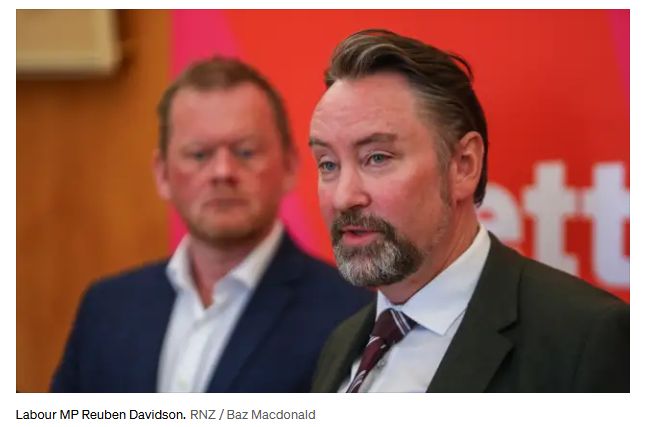
Labour MP Reuben Davidson said National’s
efforts were little more than “a PR exercise” given it
refused to progress legislation before the end of this
term.
“We’re committed to having that first reading of
the bill within the first 100 days. To getting that into the
select committee process. To getting things
started.
“It can’t just be announcements. It has to be
action.”
Davidson said Labour’s policy also featured a
“Digital Duty of Care” law to be introduced in its first
year in power, putting basic responsibilities on the
companies running online services.
“National
have talked a big game about online safety, but it’s not a
game. It’s real lives.”
Labour leader Chris Hipkins
said politicians had traditionally been slow to respond to
technological advances and needed to “urgently” get on top
of the new digital environment.
He pointed to
statistics showing one in three teenagers spending five or
more hours a day on social media: “that’s an
explosion”.
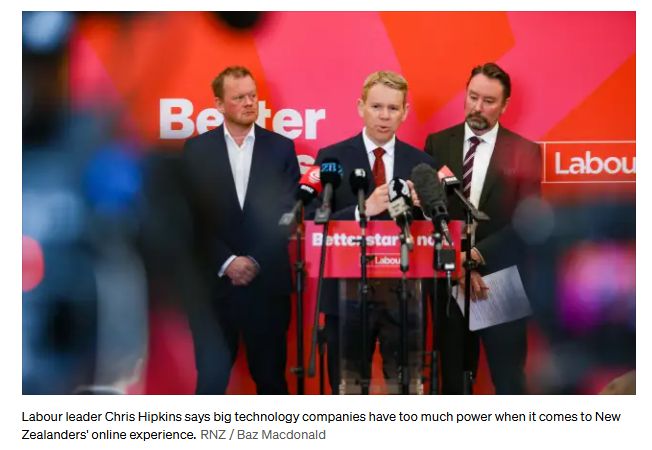
Hipkins said big technology companies had
too much power when it comes to New Zealanders’ online
experience.
“Social media is part of everyday life. It
helps us stay connected, share ideas and keep in touch with
the people we care about.”
“At the same time, scams
are becoming more sophisticated, fake images and videos are
harder to spot, and a lot of parents are worried about what
their children are seeing,” he said.
“Parents
shouldn’t have to take on big tech on their own.”
New
Zealand First leader Winston Peters dismissed Labour’s
social media ban as “a naive solution to a genuine
issue”.
“Throwing out simplistic sound bites denies
the reality that banning social media in its entirety means
either banning VPNs or using digital ID for everyone –
otherwise it’s a fool’s errand and
meaningless.”
Peters said New Zealanders should ask
themselves how far they want the government to overreach
into the rights and responsibilities of
parents.
New Zealand’s public broadcaster, providing comprehensive NZ news and current affairs, specialist audio features and documentaries.
Radio New Zealand is a Crown entity established under the Radio New Zealand Act 1995. Radio New Zealand News are vital elements in our programming, providing impartial news and information to New Zealanders every day. Radio New Zealand (RNZ) provides listeners with exciting and independent radio programmes in accordance with the Radio New Zealand Charter.

