



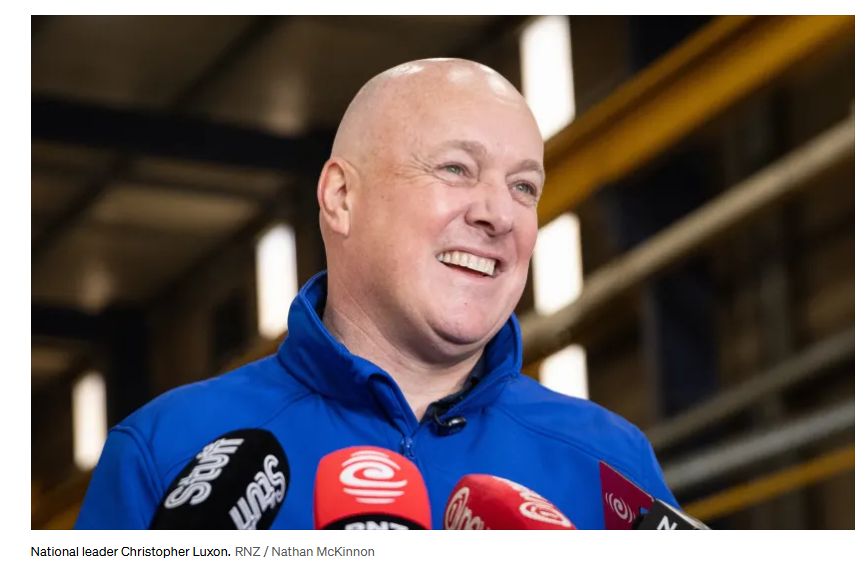
National
leader Christopher Luxon has laughed off the opposition’s
charge of voter suppression, saying more people are
enrolled right now than at this stage last
election.
The coalition this term scrapped the ability
to enrol during advance voting or on election day, meaning
anyone not registered by Sunday, 25 October will be unable
to vote in the 7 November election.
Experts warned the
significant change could shut out thousands of otherwise
eligible voters who miss the deadline.
Labour leader
Chris Hipkins said he was “very concerned” about enrolments,
particularly about youth enrolments, as well as people being
moved onto the dormant role.
His key concern about the
dormant roll was that someone’s party vote would count but
their electorate vote may not, “depending on the
circumstances”.
“I’m worried that there are going to
be a lot of people who feel quite disenfranchised by
that.
“There will be some very angry people showing up
to the polling booth when polling actually opens to find
that they have missed their window” of enrolment, Hipkins
said.
The Greens’ Chlöe Swarbrick was also
“incredibly concerned about this government’s moves to
actively suppress voting in this country”.
Advertisement – scroll to continue reading
Speaking to
reporters on Sunday as well, Swarbrick said the government
had moved ahead with its changes to scrap same-day voter
enrolment knowing “full well” it wouldn’t reduce the time to
count the votes, which was part of the justification to make
the change.
But on Monday, Luxon told NewstalkZB the
requirement on voters was not onerous and would reduce the
time and work required to count special votes.
“The
least someone can do is go get registered and enrolled to
vote 12 days out from election day,” he said. “It’s not
rocket science.”
Recent figures from the Electoral
Commission show that as of the 15 October only 65.5 percent
of 18-24 year olds were enrolled to vote.
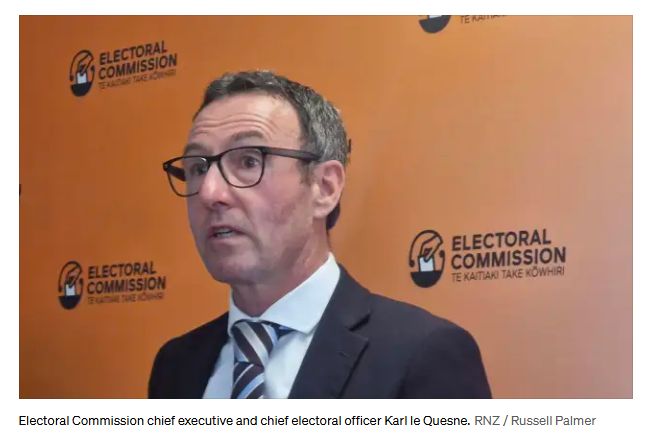
Electoral
Commission chief executive and chief electoral officer Karl
le Quesne told Morning Report today the commission
was throwing everything it could at the problem, with staff
heading to about 80 locations this week to encourage young
people to sign up.
“We’ll be putting all of our
efforts into that,” he said. “It’s really key that all
people have good information about how to enrol.
“Our
own surveys are showing a really big uptick in people saying
they know how to enrol, including those young people who 90
percent now are saying we know how to enrol.”
Despite
that, just 67 percent of 18-to-24-year-olds are currently
enrolled, compared with 76.7 percent at the 2023
election.
Le Quesne acknowledged the new rules
represented a significant change, but said the commission
had worked hard to get the message out.
He said the
commission had attended 2700 events and venues, collected
more than 28,000 enrolment forms and contracted 36 community
groups to help reach voters.
The commission had
decided against traditional door-knocking, believing
community outreach would have a greater impact.
Asked
whether it had enough resources, Le Quesne pointed to
roughly $13 million allocated to enrolment and voting
information campaigns.
“We’ve done more than we’ve
ever done before.”
RNZ
yesterday revealed Luxon was advised that the 7 November
date was “challenging” because advance voting began on a
public holiday.
Asked about that, Luxon shrugged and
said he was “pretty comfortable” with the date
selected.
New Zealand’s public broadcaster, providing comprehensive NZ news and current affairs, specialist audio features and documentaries.
Radio New Zealand is a Crown entity established under the Radio New Zealand Act 1995. Radio New Zealand News are vital elements in our programming, providing impartial news and information to New Zealanders every day. Radio New Zealand (RNZ) provides listeners with exciting and independent radio programmes in accordance with the Radio New Zealand Charter.

