


Susan
Edmunds Money Correspondent

How
much does it cost to run an election?
This year, the
answer is about $180 million.
Putting aside the cost
to candidates and political parties to run their
campaigns, which runs to millions
of dollars, the Electoral Commission has given a
breakdown of what it expects to spend getting New Zealanders
to the polls this year.
It said the biggest costs were
the temporary workforce employed for the election, then
property, paper, printing and postage. “These are all things
we need to set up and run an election where all New
Zealanders have the opportunity to enrol and vote.”
It
said this year there would be 22,000 temporary staff, 2321
election day voting places and nine million voting papers
printed.
It has budgeted $94.7m for staff costs,
$17.9m for communications, $11.6m for IT, $3.1m for travel
and catering, $23.1m for property costs and $25.5m for
printing and post. Other costs come in at just under
$6m.
Advertisement – scroll to continue reading
University of Otago professor Andrew Geddis said
the Electoral Commission had to put in a request to the
Minister of Justice outlining what funding it expected to
need to run the election.
“The physical getting of
votes and the associated advertising around it to tell
people there is an election coming up and you’ve got an
obligation to vote.
“In the end it is up to the
minister to decide whether or not to take that bid into the
budget-setting process to the Ministerof Finance, and say
‘this is what I am going to need in order to fund the
election properly’ and the Minister of Finance to then go
‘yep, okay, I’m going to include that in the Budget’. There
is no statutory formula, or anything like that.”
He
said the 90 percent enrolment had been steady over the years
and turnout in the high 70s was good by international
standards.
But he said the Electoral Commission was
facing a bigger problem in how much of its interaction with
voters happened through the post.
“That is becoming
more and more of a problem because the postal service has
just started to fall apart. The Electoral Commission was
given some money in the most recent Budgets … to try to
start modernising everything and do work to try to bring
more of those enrolment services online, in recognition that
the postal service just isn’t going to manage in the
future.”
This year, many voters will get their Easy
Vote cards via email rather than post.
He said
ultimately how much the commission was given to run the
election was up to the government. There was a case that
went to the Court of Appeal in the mid-1990s regarding the
Māori electoral option, where it was argued the government
wasn’t doing enough to publicise the Māori roll
option.
“The Court of Appeal said the government has
provided a sum of money and the government has met its
obligations. The Court of Appeal also said that there is a
implied duty on central government to make sure that
essentially the electoral system is properly funded, and
that people are appropriately told about their democratic
rights and so on … but it’s up to the government to put a
dollar figure on it.
“You could see a world in which
if a future government ever did try to essentially starve
the electoral system, you could use that case to go to court
and get a court to order the government to put more money
into the system.”
He said while all political parties
had a strong interest in how the system worked, he was not
aware of any party ever having claimed the government was
not doing enough to fund elections.
“Whatever concerns
we might have about a government not appropriately funding
democracy, it’s the sort of thing that if it was happening
you could imagine the opposition parties being very vocal
about it. The fact they haven’t been is perhaps an
indication that on this one the government is [doing] what
it should.”
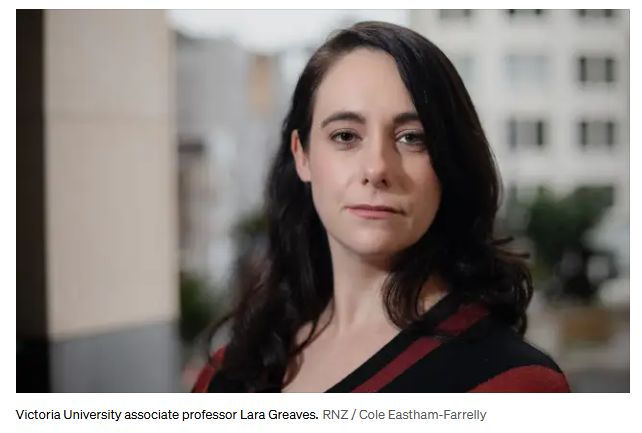
Victoria University associate professor
Lara Greaves said the amount the Electoral Commission was
given should at least increase with inflation each election
and potentially jump further because of demographic
changes.
“We
have got more ethnically diverse populations and those
populations have relationships to government where they
might need
a different way of being reached and so that costs
money.”
She said the post was a problem. “The other
thing is that people don’t necessarily have their physical
addresses up-to-date anymore as much.
“So one of the
things in the electoral law changes in this term were not
only to make it so people couldn’t
enrol in the advance voting period, but they also did
change some of the provisions to allow for data matching
across agencies to be able to manually update addresses, to
enrol people automatically … they haven’t really made an
investment in that at this point.
“That actually needs
quite a decent chunk of IT investment to be able to link
those data up.”
She said it had been suggested a live
digital roll mark-off would speed up the vote count but that
would also require significant investment.
She said
there was not enough money being made available for the
process.
“What I would do if I I wanted to downgrade
our democracy, if I wanted to let it erode a bit would be
not fund at least at inflation but also not fund those kinds
of projects that update the system, take it out of the 1950s
which has been what’s been needed for quite some
time.”
New Zealand’s public broadcaster, providing comprehensive NZ news and current affairs, specialist audio features and documentaries.
Radio New Zealand is a Crown entity established under the Radio New Zealand Act 1995. Radio New Zealand News are vital elements in our programming, providing impartial news and information to New Zealanders every day. Radio New Zealand (RNZ) provides listeners with exciting and independent radio programmes in accordance with the Radio New Zealand Charter.
