



Tim Brown
South Island Correspondent
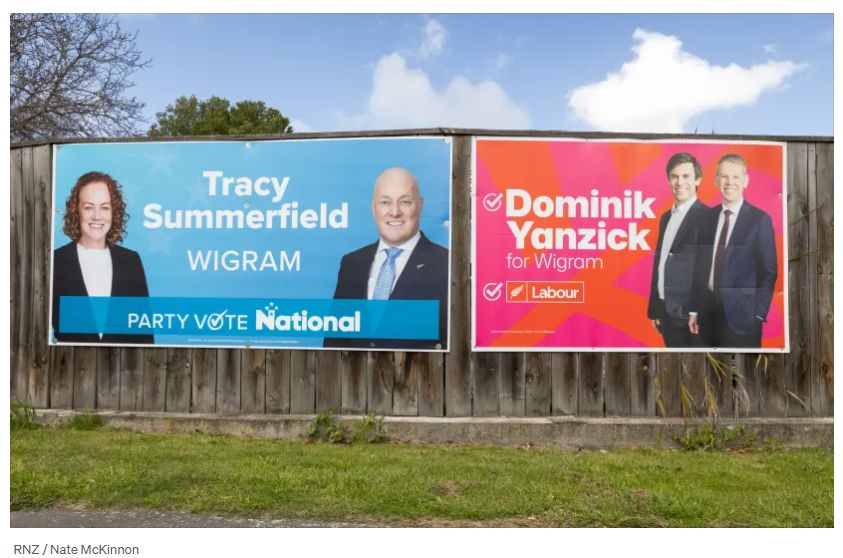
Wigram
is a likely two-horse race between National’s Tracy
Summerfield and Labour’s Dominik Yanzick.
The
south-west Christchurch seat of Wigram takes its name from
the former airfield at its heart.
The electorate is
young and diverse – but changing boundaries have also
changed its character.
Why is it
interesting?
While RNZAF Station Wigram – New
Zealand’s first military airfield – is long gone, the
aerodrome has left its mark.
Street names give a nod
to its aviation history along with the subdivision at its
centre – Wigram Skies.
The electorate has been a
left-wing stronghold for decades.
Labour MP Megan
Woods inherited the seat from her mentor Jim Anderton after
his retirement and has held it since 2011.
Anderton,
who was a former Progressive, Alliance and NewLabour leader,
held Wigram after the current seat was created in
1996.
Labour MP Mick Connelly held an earlier
iteration of the seat from 1969 to 1978.
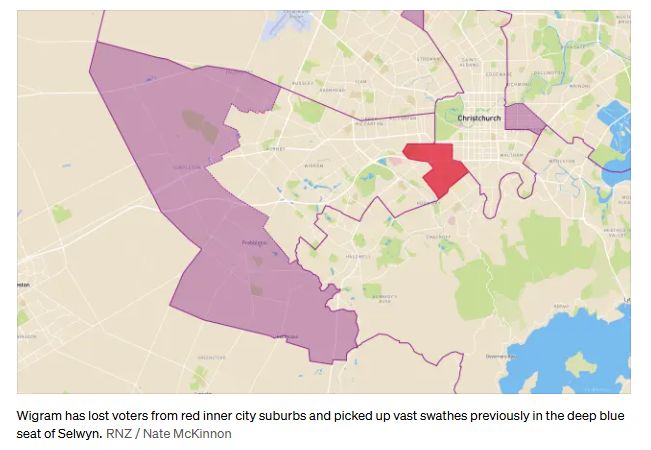
When
electorate maps were redrawn last year, Wigram lost about
10,000 voters from traditionally ruby red areas close to the
central city in Addington and Spreydon and picked up more
than 11,000 voters from Prebbleton and rural areas carved
from the deep blue neighbouring seat of Selwyn.
Advertisement – scroll to continue reading
Selwyn
National voters have often outnumbered Labour voters by more
than two to one and Labour’s candidate finished third in the
electorate race in 2014.
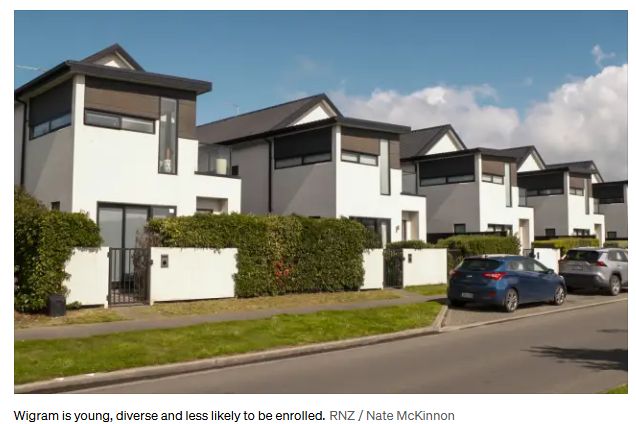
Wigram
is also diverse with only 63.3 percent of people identifying
as European at the last Census, compared to 67.8 percent
across New Zealand.
Data showed 10.2 percent
identified as Māori (17.8 percent nationally), 4.8 percent
as Pacific Peoples (8.9 percent nationally) and 28.9 percent
as Asian (17.3 nationally).
The electorate is also
younger with about 30 percent of potential voters aged
between 18 and 34, although only 54 percent of people under
25 are enrolled to vote compared to 57.5 percent
nationally.
Wigram has the lowest enrolment nationally
across all age groups.
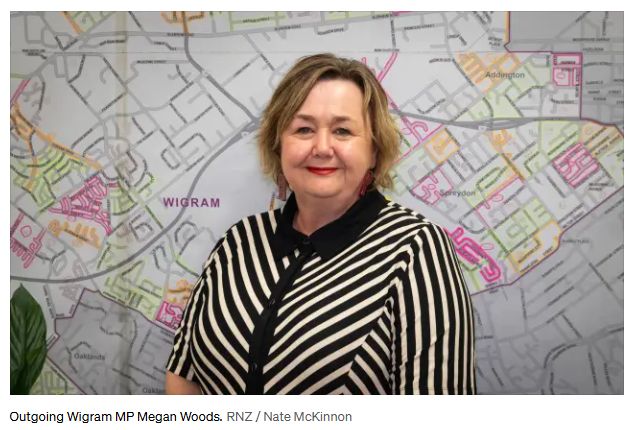
The seat will be an open race
for the first time since 2011 because Woods is stepping
aside after five terms to run as a list-only
candidate.
What
happened last election?
Woods garnered 15,590 votes,
holding off National newcomer Tracy Summerfield by just 1179
votes.
The result was a steep decline from the 24,186
votes Woods picked up in 2020 and the slimmest margin by
which she had ever won the seat.
National also won the
party vote by 2152 votes, its best effort since the height
of John Key’s popularity in 2011 and 2014.
Who’s
standing?
With Woods standing as a list-only Labour
candidate, newcomer Dominik Yanzick will represent the
centre-left party in the election.
Yanzick works in
the tech sector and previously worked in agritech in
Lincoln. He grew up south of the Waitaki River in North
Otago after his parents migrated to New Zealand in the late
1980s.
Tracy Summerfield is again standing for
National after coming close to taking the seat in 2023. She
previously owned and ran childhood education centres for 15
years and has more than 28 years of experience in accounting
and finance across the public and private
sectors.
List
MP Laura McClure is representing ACT after unsuccessfully
standing for Banks Peninsula in the last election. A
Christchurch local, she led fire evacuation planning company
Fire Safety Net before entering Parliament.
Political
novices Bryce Park and Shreejan Pandey will represent New
Zealand First and the Greens.
Park grew up in the
Christchurch suburb of Yaldhurst and studied at the
University of St Andrews in Scotland. He worked as an
economic adviser on his father’s unsuccessful 2019
Christchurch mayoral campaign.
Pandey is an electrical
engineer and father of two. He is also director of the
Monash Energy Institute at Melbourne’s Monash
University.
It is likely to be a two-horse race
between Summerfield and Yanzick with current polling giving
Yanzick the edge, although boundary changes since the last
election are likely to create a tight race.
What do
the locals say?
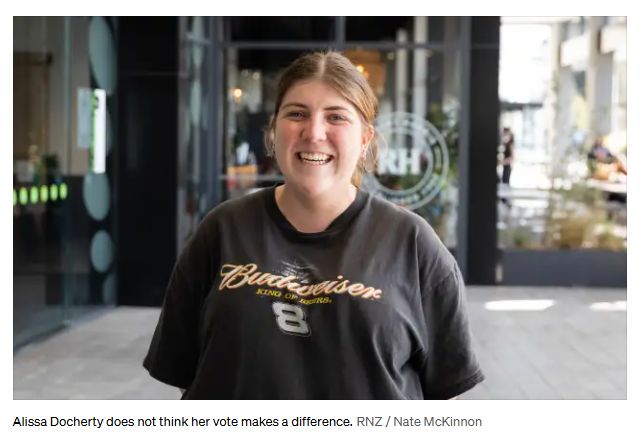
Alissa
Docherty is one of the unenrolled under-25s and does not
feel like her voice counts for much in the
election.
“I don’t see why it makes a difference if
one person doesn’t vote,” she said.
“It just doesn’t
really faze me, I suppose. I don’t feel like my input
matters as much.”
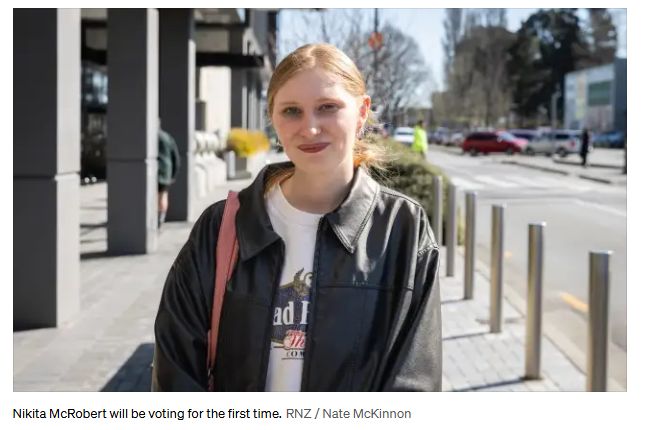
First-time
voter Nikita McRobert, 20, is enrolled and enthusiastic
about exercising her democratic right.
“If more people
my age knew the importance of it, I feel like we’d
definitely get more people voting,” she said.
“I think
that’s really important. We definitely do need, especially
people my age, to be voting more.”

Most
voters told RNZ the cost of living would be the biggest
issue on their minds when they go to the ballot
box.
Business owner Neetu Saini said business was
tough with the lack of spare cash and retail crime still a
concern.
“It’s still very bad. Last month I had two
people stealing off my shelves.
“I think it’s
increased a lot. I haven’t seen any change,” she
said.
New Zealand’s public broadcaster, providing comprehensive NZ news and current affairs, specialist audio features and documentaries.
Radio New Zealand is a Crown entity established under the Radio New Zealand Act 1995. Radio New Zealand News are vital elements in our programming, providing impartial news and information to New Zealanders every day. Radio New Zealand (RNZ) provides listeners with exciting and independent radio programmes in accordance with the Radio New Zealand Charter.

