

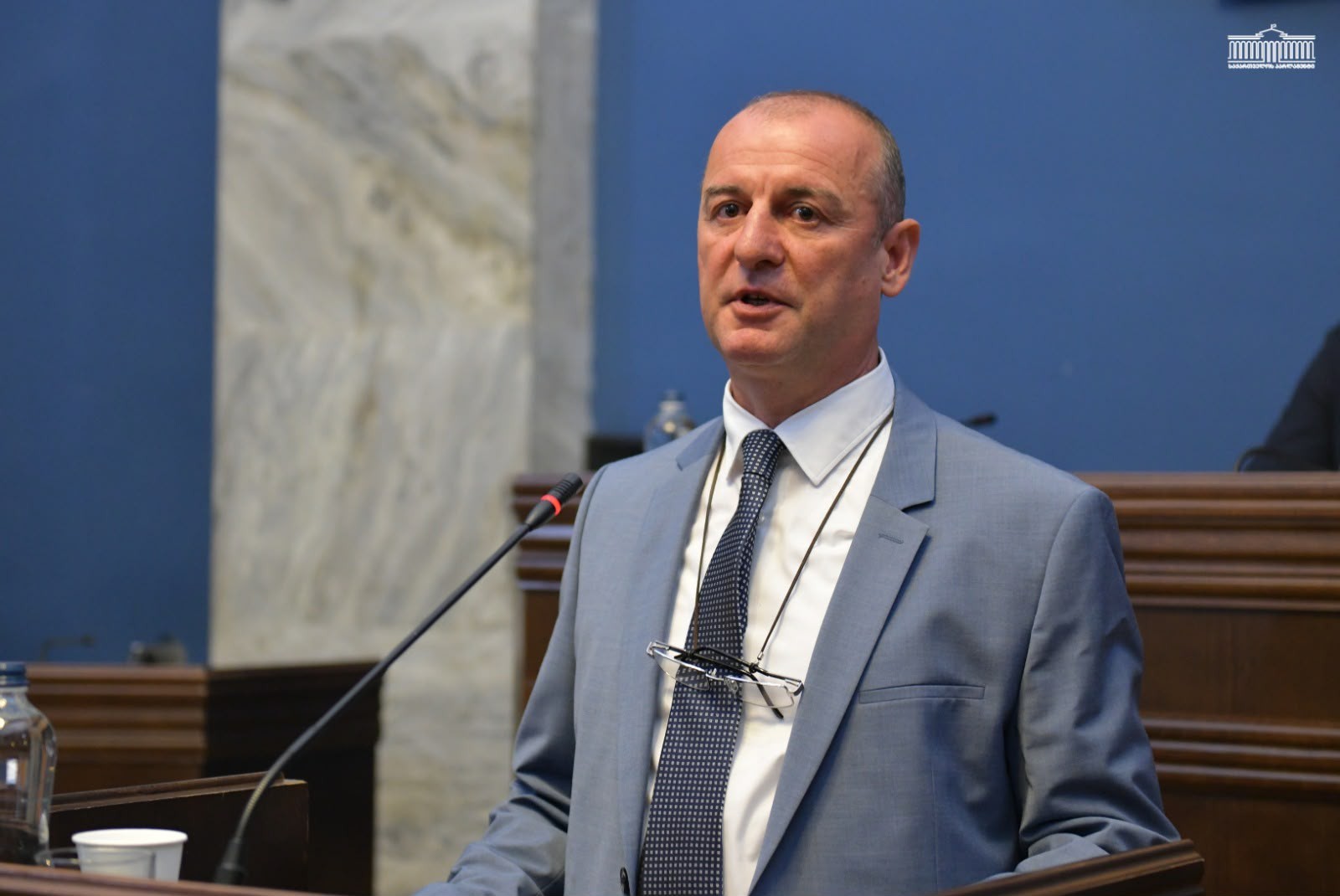
The disputed Parliament on September 15 elected Davit Mamiseishvili as a judge of Georgia’s Supreme Court, with 85 MPs voting in favor and 12 against. Mamiseishvili will serve a lifetime term, with his appointment taking effect on April 30, 2027, according to Parliament’s press release.
Mamiseishvili, 48, has served as a judge at the Tbilisi Court of Appeals since 2021, including in its Criminal Cases Chamber and Investigative Panel (2024-2025). Since November 2025, he has served in the court’s Civil Cases Chamber.
He previously served as a judge of the Khelvachauri District Court from 2009 to 2013. He then joined the Batumi City Court, serving as a judge and court chairman from 2013 to 2016. He shortly served on the court’s Civil Cases Panel and, from 2016 to 2021, its Criminal Cases Panel.
The High Council of Justice (HCoJ), the body overseeing Georgia’s judiciary, submitted Mamiseishvili’s candidacy to Parliament in May, along with those of five other sitting judges: Tamar Alania, Dimitri Gvritishvili, Giorgi Goginashvili, Liana Kazhashvili and Salome Samkharadze.
Georgia’s judiciary has long faced criticism from civil society groups and opposition figures, who accuse a group of influential senior judges, commonly referred to as the “judicial clan,” of controlling key judicial appointments and decisions in the interests of the ruling Georgian Dream party. The issue of stalled judicial reforms has also become one of the key obstacles on Georgia’s EU integration path over the years.
In 2023, the U.S. State Department sanctioned several senior and former Georgian judges, citing abuse of office and “undermining the rule of law and the public’s faith in Georgia’s judicial system.”
The United Kingdom also sanctioned senior Georgian judges in 2025, with London citing their involvement in “serious corruption” aimed at influencing judicial appointments and securing rulings favorable to the ruling party.
Speaking before Parliament’s Legal Issues Committee on September 14, Mamiseishvili defended the Georgian judiciary against the U.S. and UK sanctions, saying they were intended “to discredit the judiciary, because an independent court in Georgia suits none of them – if they had the levers to obtain the rulings they wanted, that would be acceptable to them.”
“Today the Georgian judiciary is more independent than it has ever been,” he said, adding that judges are individually responsible for their rulings and that “a decision taken by one judge cannot be treated as a matter of collective responsibility.”
Also Read:

