



Russell
Palmer Political reporter
Digital
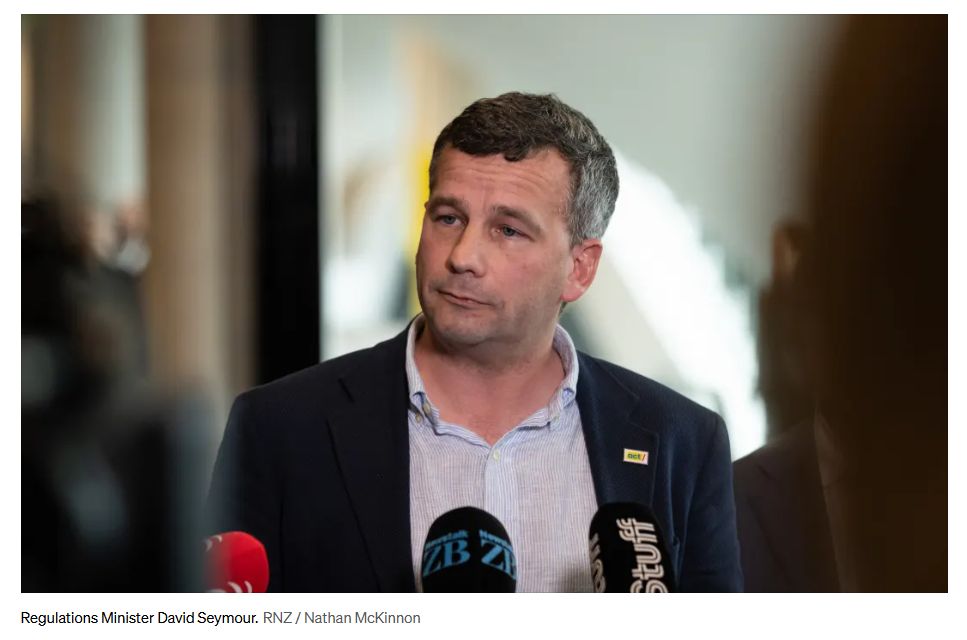
product labelling is being introduced which Regulations
Minister David Seymour says will allow for real-time
updates, lower costs and save space currently taken up by
physical labels.
Separately, over-the-counter medicine
labelling will be aligned with Australia’s, so that
companies need not produce specific labels for New
Zealand.
Seymour said a national standard was being
developed for digital labelling, which had been unavailable
in New Zealand but was expected to generate $111 million
over 10 years.
“Currently exporters face extra
compliance costs preparing products for overseas markets,
while consumers miss out on global goods because importers
face differences in labelling requirements,” he
said.
“Kiwi exporters want to be able to use digital
labelling to convey product information. It allows labels to
updated in real time, reduces costs associated with physical
labels which have limited space and are difficult to update,
and supports export growth because international markets are
moving ahead with digital product information.”
He
said the digital labels would not replace physical labelling
but would give businesses the option to adopt the current
global standard.
Advertisement – scroll to continue reading
Seymour said the change for
over-the-counter medicines would make New Zealand a more
attractive place for companies to sell
them.
“Medicines sold at pharmacies in Australia must
be specially re-labelled in line with New Zealand labelling
requirements so they can be sold at Pharmacies in New
Zealand,” he said.
“The harsh reality is that
international companies don’t consider it a privilege to
invest in New Zealand. We are a small market. If we force
international companies to pay a premium to stock their
products on our shelves, they won’t bother. Other countries
are cheaper, have larger populations and more
customers.”
Consumer NZ has warned the new QR codes
could be unequitable and mean people without access to a
device won’t
have access to the information usually available on the
printed label.
Seymour said he accepted that was a
“challenge” but equity “cuts both ways”.
“With digital
labelling, you can have more languages, so it can be more
inclusive.
“If you look at most of New Zealand policy,
one of our issues is actually trying to stop kids getting
these digital devices, so, there may be an issue there, but
there will also be more inclusion by different languages and
more information.”
He said changing the labelling on
food products were not going to “move as fast as everything
else” because of New Zealand’s commitment to Food Safety
Australia and New Zealand
(FSANZ).
“We have a very
different challenge as a country, that we are part of FSANZ
and we need to persuade each Australian state – six of them
and one of us – to adopt new
standards.
“Australia is not
always that quick on the uptake, so you have to really work
with them. But we will see progress in food as
well.”
The changes come as a result of a review of
product labelling by the Ministry for
Regulation.
Seymour said decisions on the rest of the
review were yet to be
made.
New Zealand’s public broadcaster, providing comprehensive NZ news and current affairs, specialist audio features and documentaries.
Radio New Zealand is a Crown entity established under the Radio New Zealand Act 1995. Radio New Zealand News are vital elements in our programming, providing impartial news and information to New Zealanders every day. Radio New Zealand (RNZ) provides listeners with exciting and independent radio programmes in accordance with the Radio New Zealand Charter.

