



Giles
Dexter Political reporter
The road freight
industry says the country will be digging itself a deeper
hole if governments continue to put off or cancel increases
to fuel excise.
Labour has committed not
to increase the fuel excise duty for an entire term, if
elected.
The fuel excise duty is due to rise by 12
cents a litre from January, followed by a 6 cents per litre
rise in 2028, and 4 cents per litre in subsequent
years.
The government’s position is that it is
“unlikely” the fuel excise duty will be increased in
January, with a decision set to be announced soon.
National’s view is that the increase should be
delayed.
The fuel excise duty is set at a flat rate
per litre (currently around 70c), meaning as inflation or
the cost of petrol rises or falls, the excise duty stays the
same.
In real terms, it means the fuel excise duty had
fallen by 21 percent since the last increase in 2020, while
at the same time construction costs had increased.
The
money collected from the fuel tax went into the National
Land Transport Fund, which paid for the building,
maintenance, and upgrading
of the roading network.
Advertisement – scroll to continue reading
Ia Ara Aotearoa
Transporting New Zealand, the national association for road
freight, said roading repair and maintenance could only keep
pace with a growing economy if there was investment in it,
and if freight became more costly or difficult to move
around, it would show up in the cost of living.
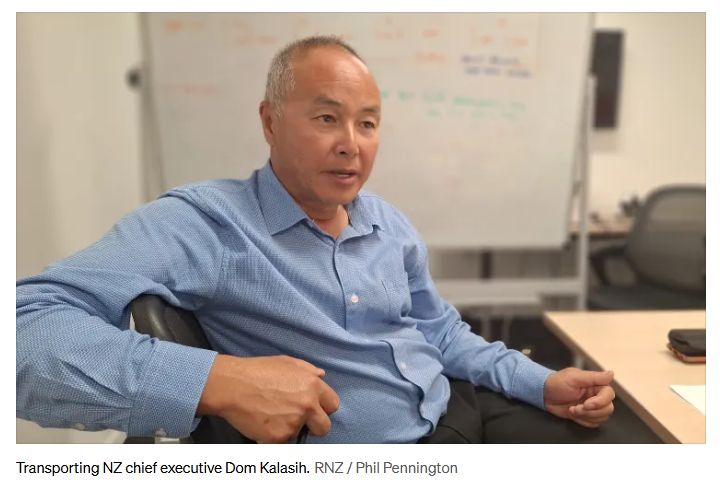
Chief
executive Dom Kalasih said he was “flabbergasted” by the
proposition of increases being put off even more, saying
continuing to put the increase off would be a “threat” to
economic development.
“We’ll be digging ourselves a
deeper hole. I think it’s already well recognised there is a
significant gap between the revenue collected from petrol
excise duty and from road user charges, and what needs to be
spent on the infrastructure,” he said.
“Unless the
government, whatever colour or brand it is, has got some
other cunning plan to introduce some revenue, then we are
going to get increasing
risk of transport problems, and that will likely have an
adverse effect on our economic prosperity.”
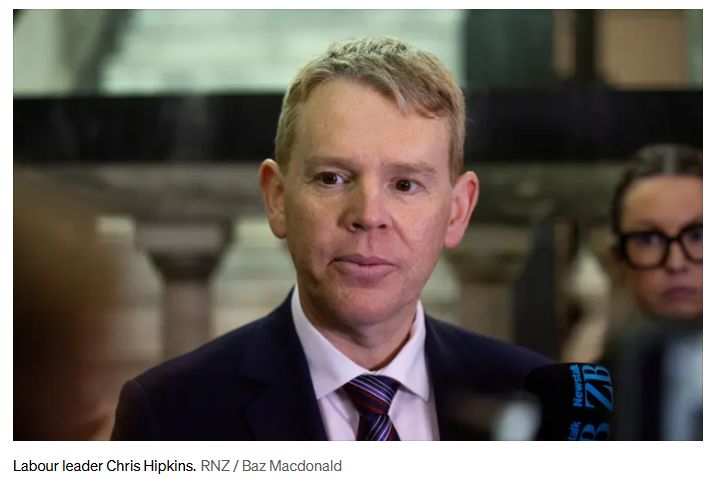
Labour has
long said it would not go ahead with the January increase,
but on Thursday Labour leader Chris Hipkins said the taxes
would not be increased at all next term.
The
Treasury’s advice in the Budget Economic and Fiscal Update
said each six-month deferral of the planned increase from
January 2027 had a cost of around $300 million, meaning
Labour’s three-year deferral could cost around $1.8
billion.
The forecasts, however, only took into
account the deferral of the 12c increase in January, not the
planned 6c increase in 2028, and subsequent 4c increases,
none of which Labour would go ahead with.
The party
also wants to take $65m a year out of the fund to pay for
its promised public transport cap.
Hipkins has
signalled a “scaling” of transport infrastructure spending
to deal with the reduced revenue, but he would not give a
view of which projects could be scaled, noting the
Government Policy Statement (GPS) for the next three years
had not been set.
The
GPS had been delayed until after the election, with Hipkins
saying there was “no fixed plan” for the next three
years.
“When it is set, it will have to scale to
within the budget that’s available,” he said.
It
marked a reversal from the 2023 election, in which National
campaigned on not increasing petrol taxes in its first term,
while Labour had planned for gradual increases through to
mid-2026.
The previous government had also reduced the
fuel excise by 25 cents a litre in response to the war in
Ukraine 2022. That was then extended, before ending in July
2023.
Earlier this year, the government opted not to
cut fuel excise duty in response to the current fuel crisis,
after Treasury warned
it would be poorly targeted and provide limited
relief.
On Thursday, the finance minister Nicola
Willis said the government “will not be increasing fuel tax”
in January, which a spokesperson later clarified was
National’s position, and the final decision would be made
and announced in due course.
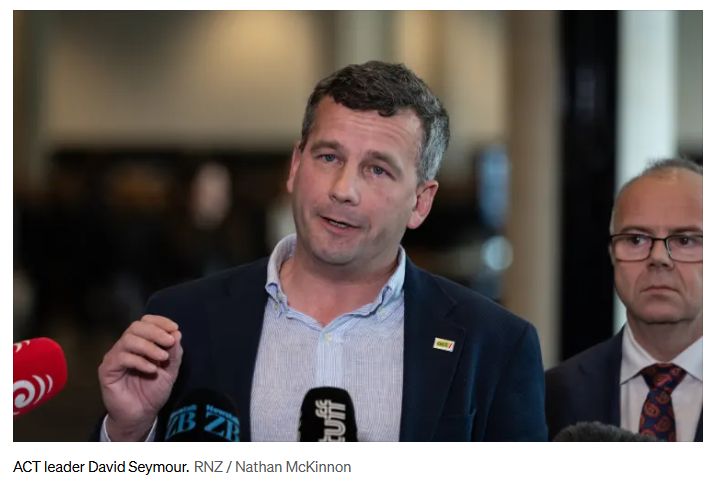
ACT
leader David Seymour said the matter had gone to Cabinet
Committee earlier in the week, and was being
considered.
“Cabinet is yet to make a final decision,
and I tend to think government decisions are best announced
after Cabinet has made them,” Seymour said.
New
Zealand First deputy leader Shane Jones said Labour was
being desperate.
“They need to accept that there are
inexorable pressures. If we are to continue to modernise and
meet the expectations of Kiwis in relation to infrastructure
development, I think all fair-minded Kiwis realise that we
have to contribute from time to time if we’re going to
maintain and expand the capacity of our
infrastructure.”
The government’s plan is to
eventually do away with fuel taxes altogether, and move the
full vehicle fleet to road user charges
(RUC).
Legislation to amend the RUC system to enable
the transition of light vehicles from fuel excise duty to
RUC is currently going through Parliament.
No date had
been set for the transition, however, with the transport
minister previously saying it was more important to get the
system right than rush the
rollout.
New Zealand’s public broadcaster, providing comprehensive NZ news and current affairs, specialist audio features and documentaries.
Radio New Zealand is a Crown entity established under the Radio New Zealand Act 1995. Radio New Zealand News are vital elements in our programming, providing impartial news and information to New Zealanders every day. Radio New Zealand (RNZ) provides listeners with exciting and independent radio programmes in accordance with the Radio New Zealand Charter.

