


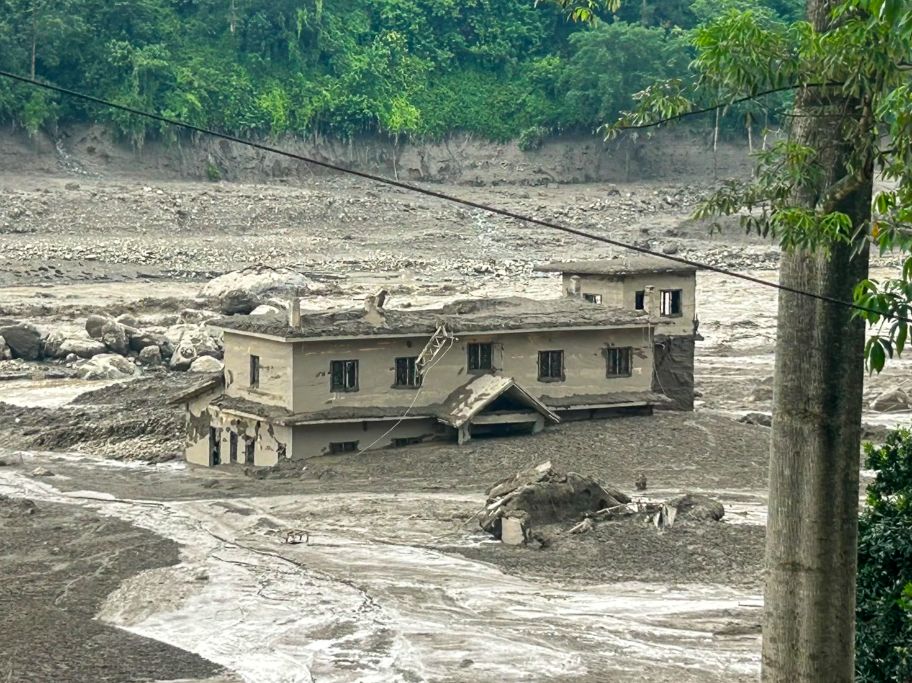
home surrounded by mud and debris in Rasuwa district after
severe flooding swept through the area
(Photo/Supplied)
Rescuers are racing
to find survivors in the flash flood-devastated areas of
Northern Nepal, as Save the Children delivers emergency aid
to families, with many places still only accessible by
helicopter.
The disaster in the Rasuwa region struck
at a time when children were either on their way to school
or starting lessons. Many children in the area travel long
distances to school – areas that are now cut off by flood
waters, potentially separating them from their families or
caregivers. Damage to phone and internet infrastructure is
also making it challenging for families to contact
relatives.
Families are finding shelter wherever they
can. Some have moved in with relatives; others are living in
public buildings such as community centres. Access to clean
water has been severely disrupted across the
district.
Save the Children staff working in the flood
affected areas say there are significant challenges in
reaching communities in need of aid. Roads have been blocked
or flooded, and severe traffic congestion is slowing rescue
and relief efforts as some people flee affected areas and
others travel towards them to support rescue
operations.
As the number of people confirmed dead
rises (https://www.bbc.com/news/live/c6y8mjmnpxv0t),
hundreds of people are still reported missing. The massive
flash floods came without warning, sweeping through
communities in the mountainous region and leaving behind
destroyed homes and buildings, broken bridges and a sea of
mud and debris.
Tara Chettry, Country Director, Save
the Children in Nepal, said:
Advertisement – scroll to continue reading
“Children’s lives
changed in an instant. Some have lost their homes and
belongings and a sense of security. For a child, losing a
home is not just losing a building, it is losing the place
where they feel safe.
“In the aftermath of a disaster
like this, children are among the most vulnerable and face
heightened risks to their health, safety, protection, and
wellbeing. They will be confused and distressed after
witnessing such devastation. Identifying any separated or
unaccompanied children must be a priority for the rescue and
response teams.
“While immediate assistance is
urgently needed, the response cannot stop with emergency
supplies. There will be no quick recovery for many of these
communities and children and families will need sustained
support well beyond the first days and weeks of this crisis,
to meet their urgent needs, rebuild their lives, return to
school and recover from this devastating
disaster.
“Flexible funding is critical. It will allow
us and our local partners to respond to longer term needs as
the situation evolves, while investing in recovery and
resilience so communities can rebuild safer and
stronger.”
Save the Children in Nepal’s emergency
response team is working in the affected areas and
delivering essential items, including household and cooking
kits, mosquito nets and blankets to 1,000 households in the
first phase of assistance.
The humanitarian and child
rights organisation is coordinating with national and local
authorities to establish the immediate and long-term needs
of children and families and is ready to scale up its
response.
Save the Children has worked in Nepal since
1976. The organisation runs programmes spanning child
protection, child rights governance, education, climate
change, gender equality, health and nutrition and child
poverty.
About Save the Children NZ:
Save the
Children works in 120 countries across the world. The
organisation responds to emergencies and works with children
and their communities to ensure they survive, learn and are
protected.
Save the Children NZ currently supports
international programmes in Fiji, Cambodia, Bangladesh,
Laos, Nepal, Vanuatu, Solomon Islands and Papua New Guinea.
Areas of work include child protection, education and
literacy, disaster risk reduction and climate adaptation,
and alleviating child
poverty.

