



Jo Moir
Political editor
Analysis:
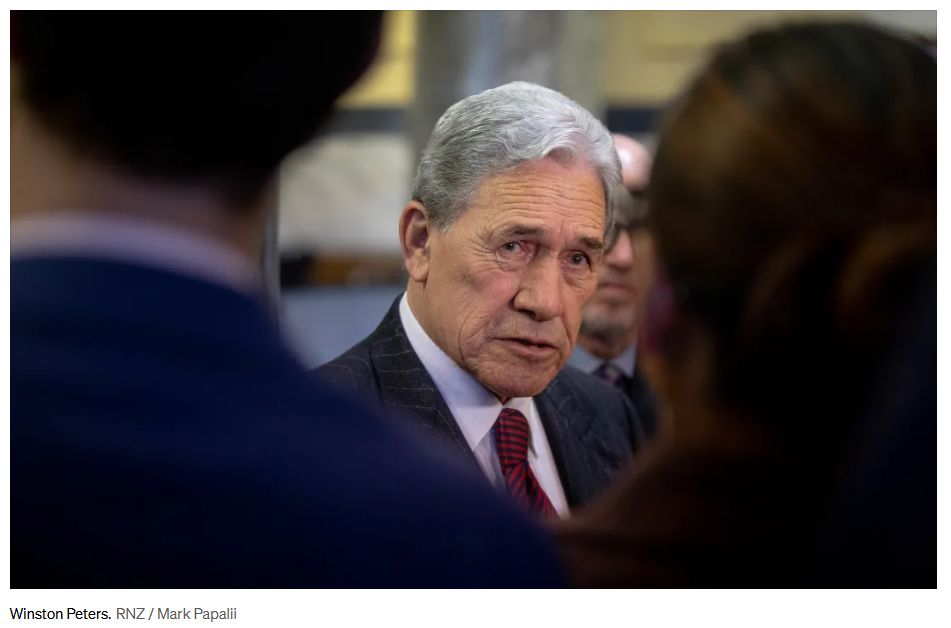
With less than three months until the country goes to the
polls Winston Peters is at a fork in the road.
The New
Zealand First leader needs to quickly choose whether to stay
the course with his committed and loyal voter base or
potentially put it all on the line seeking new votes on the
fringes.
While the spotlight this week was firmly on
Christopher Luxon’s second confidence
vote in four months, the week before it was Peters who
was causing headlines for the wrong reasons.
A 1News-Verian
poll on Wednesday gives an insight into how the public
responded to both.
It had National unchanged on 29
percent and New Zealand First dropping three points to 8
percent – putting it equal with rising minor party,
Opportunity.
The poll was conducted between Saturday
and Tuesday. 1News pulled out of the field early as a result
of Luxon’s summoning of his MPs to Wellington, only
collecting 847 respondents of a usual 1000 sample size,
leaving a margin of error of +/- 3.4 percent.
Advertisement – scroll to continue reading
New
Zealand First had been soaring in polls prior to this month
– in RNZ’s mid-July poll it registered its strongest result
in the Reid Research series in nine years reaching 11.5
percent.
Since then Peters gave a speech in
Parliament’s general debate where he got sidetracked by
heckling from Chinese-born Green MP Lawrence Xu-Nan, who he
told to “go back to your own country”, and continued,
“that’s where they lie like a flatfish”.
The comments
drew protest from the Chinese Embassy in New Zealand and
prompted a response from the office of the Minister of
Foreign Affairs, saying he stood
by the comments – up until that point Peters had been
claiming the comments were made as NZ First
leader.
The reaction to the comments has been swift
and angry, from the Chinese-Kiwi
community, to opposition MPs, and even Peters’ very own
coalition partners, with Luxon saying it was
“racist”.
And it’s not only non-NZ First voters
seemingly fed up with the inflammatory rhetoric.
The
comments are clearly impacting its own voter
base.
The New Zealand First dilemma
The
current iteration of NZ First supporters is two very
distinct groups – the pro-industry, mining, exporting,
economic growth over environmental concerns types, and a
much newer mob of fringe culture war
antagonists.
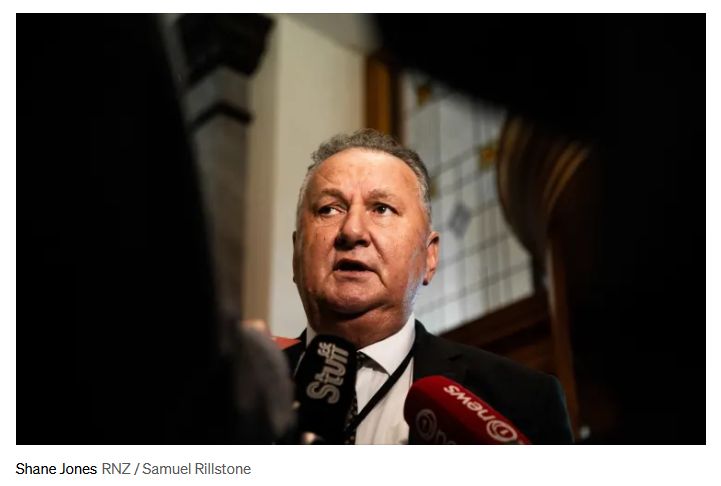
Broadly speaking deputy leader Shane
Jones speaks to the first group and Peters the
second.
There’s crossover for sure with Jones having
led the charge on recent anti-immigration rhetoric, warning
of a “butter
chicken tsunami” from signing an Indian FTA.
But
for the most part he steers clear of culture war talking
points like Covid vaccination injuries and who should be
using which public bathrooms.
Increasingly
NZ First party stalwarts are tiring of the messaging being
focused on appealing to the fringe-newcomers.
With
National increasingly a party polling under 30 percent there
are votes ripe for the picking, and the latest poll
indicates it’s Act benefiting from National’s stalling and
NZ First’s drop.
Peters spending his time speaking to
a small disillusioned and disenfranchised group of New
Zealanders is not going to give him any wins with voters
tossing up moving their vote away from the diminishing
‘purple vote’ of National and Labour.
On top of that
NZ First is also at risk of giving Act some of its base,
voters who back a return of the coalition but are losing
faith in Peters’ distractions.
Peters already has a
playbook for how badly this could end – it was the 2020
election where he went from being deputy prime minister and
foreign minister to being out of Parliament
altogether.
Having spent both the 2017 and 2020
election campaign on the road with Peters the difference in
strategy between the two was incredibly stark.
In 2017
Peters was firing on all cylinders, admittedly from a
position of Opposition which he relishes, but also being
very deliberate about targeting National and Labour voters
and speaking to middle New Zealand as a kingmaker who could
keep Act and the Greens in check.
By 2020 he was
campaigning from a coalition with a Labour government in the
middle of a pandemic with a hugely popular prime
minister.
Just before he went out on the road Peters
said he would run a “relentlessly positive” campaign focused
on what Labour and New Zealand First had achieved in
coalition together.
Then within the first few days of
the campaign starting in August then-prime minister Jacinda
Ardern announced the election date was postponed from
September to October while Auckland dealt with a new
community cluster and the rest of the country would remain
at Level 2.
The restrictions significantly impacted
the way parties could campaign – Peters’ usual town hall
meetings and public gatherings weren’t allowed and very
quickly he turned on Ardern and started running a campaign
opposing her at a time her personal popularity was
skyrocketing.
It was a fatal mistake by Peters, and
one many in his party didn’t support including senior MPs at
the time, Ron Mark and Tracey Martin.
While one camp
was telling him to stick to the original strategy there were
others encouraging his resentment and hyping him up to go on
the attack.
By election night in Russell, he only had
Shane Jones at his side, having isolated himself from the
rest of his MPs, and the party was ejected from
Parliament.
There’s a huge lesson in that three-month
period of NZ First’s history and Peters is now right back
there with a decision to make.
Coalition parties
fight their own corners
The Herald-Motu Research Poll
of Polls has this week shifted the probability of the
coalition having enough support to form a government after
the election from 61 percent to 51.5 percent.
National
has just been through a second confidence vote in four
months of its leader and prime minister and has some serious
work to do convincing prospective voters it’s worried about
the country, and not just itself.
Act, however, is
running a different race and deliberately trying to keep the
coalition together while also looking to make gains from
National and NZ First’s slip-ups.
The 1News-Verian
poll registered the party on 9 percent – up three
points.
Act party supporters have been clear they want
stability from the coalition, prompting a focus from the
leadership on proposing its own policy and not spending too
much time criticising its partners’ ideas or personal
blunders.
Leader David Seymour has the shackles of
being deputy prime minister but is also deliberately trying
to give an air of being measured and mature while Luxon and
Peters have repeatedly scrapped it out publicly.
He
also has the benefit of new
candidate Paul Henry, who not only draws big crowds to
any public meeting, but can also say
some of the things Seymour can’t.
Henry isn’t an
MP in government and has the luxury of being able to take a
whack at Luxon and Peters and not look like he’s trying to
take down the coalition.
Peters returns to Parliament
for a new sitting block next week where his tone and focus
may give a good indication of the road he’s
chosen.
New Zealand’s public broadcaster, providing comprehensive NZ news and current affairs, specialist audio features and documentaries.
Radio New Zealand is a Crown entity established under the Radio New Zealand Act 1995. Radio New Zealand News are vital elements in our programming, providing impartial news and information to New Zealanders every day. Radio New Zealand (RNZ) provides listeners with exciting and independent radio programmes in accordance with the Radio New Zealand Charter.

